The United States campaign to pressure Venezuelan President Nicolás Maduro has triggered a severe aviation crisis, leaving millions of Venezuelans cut off from the world and dependent on a tiny, aging fleet of aircraft. This move has stranded citizens globally, cancelled family reunions, and crippled an already struggling nation's air connectivity.
A Nation Grounded: The Immediate Fallout
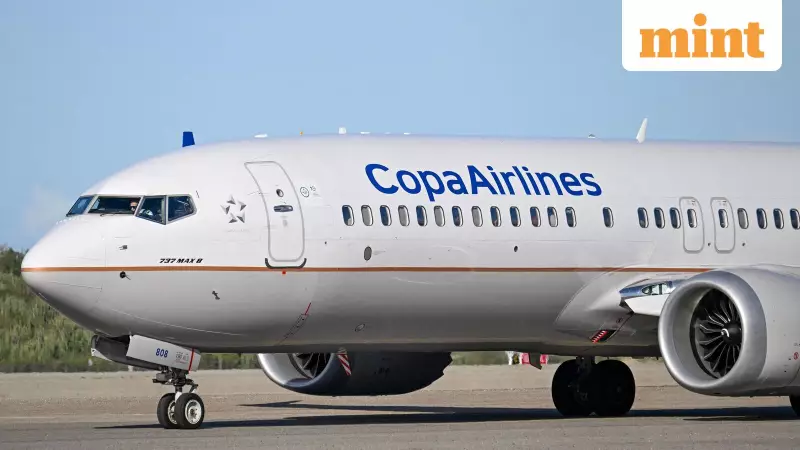
Following a warning from the US Federal Aviation Administration (FAA) about a "potentially hazardous situation" due to military activity, and a subsequent statement from former President Donald Trump on November 29 treating the airspace as closed, over a dozen international airlines suspended flights to Venezuela. The International Air Transport Association (IATA) reports that the country's 28 million people now rely on roughly 20 old commercial planes operated by local airlines.
The human cost has been swift and painful. Travel agents report that local carriers are rerouting flights through neighboring countries at steep prices. Holidays are cancelled, families cannot deliver crucial medicine to elderly relatives, and cash-strapped Venezuelans find themselves marooned abroad. Weekly passenger traffic, which averaged 15,000 in and out of the country in recent years, has now crashed to between 1,000 and 2,000.

Personal Stories of Stranding and Struggle
The crisis has deeply impacted ordinary Venezuelans. Reynaldo Goitía, the frontman of rock band Tomates Fritos known as Boston Rex, was stranded in Madrid after his December 5 return flight was cancelled. To conserve his tour earnings, he survived on fast food and slept on a used mattress in a friend's office, washing in a sink, before embarking on a costly detour via Barbados to reach home for Christmas.
Similarly, marketing agent Alejandra Acuña in Spain had to cancel a long-planned trip to introduce her partner to Venezuela and host a family reunion. Her cousins, who were to bring expensive Parkinson's medication from Colombia, also had to call off their journey, losing deposits for a trip to Margarita Island. "It’s unfortunate, we had to tell my parents at the last minute that we’re not going to make it," Acuña said.
Safety Concerns and a History of Decline
Safety has become a paramount concern with the US deploying warships to the region. A December 12 incident involved a near-collision between a JetBlue flight from Curaçao and a US Air Force refueling jet, which industry insiders suspect may have been caused by GPS and radar jamming. Peter Cerdá, IATA's Vice President for the Americas, emphasized that airlines must avoid incidents where a civilian plane could be mistaken for a military target.
This crisis is a stark contrast to Venezuela's aviation past. In the 1970s, Caracas was a destination for the Concorde. From the 1990s to mid-2010s, it was a high-yielding market, fueled by oil wealth and subsidies under Hugo Chávez. However, economic collapse under Maduro, currency controls, and unpaid airline revenues led to a mass exodus of carriers like Delta and Lufthansa. The US-sanctioned state carrier Conviasa was left serving a few allies.
The flight disruptions are also halting essential cargo, including pharmaceuticals, perishable goods, and critical aircraft parts needed to maintain the remaining fleet. Aviation expert Gregory Barrios estimates 40,000 people had December travel plans affected. While Venezuela has increased flights to Colombia and stripped licenses from foreign carriers that suspended services, the isolation is severe. As Caracas-based lawyer Rodolfo Ruiz noted, in geopolitical conflicts, it is always the average passenger who pays the biggest price.