

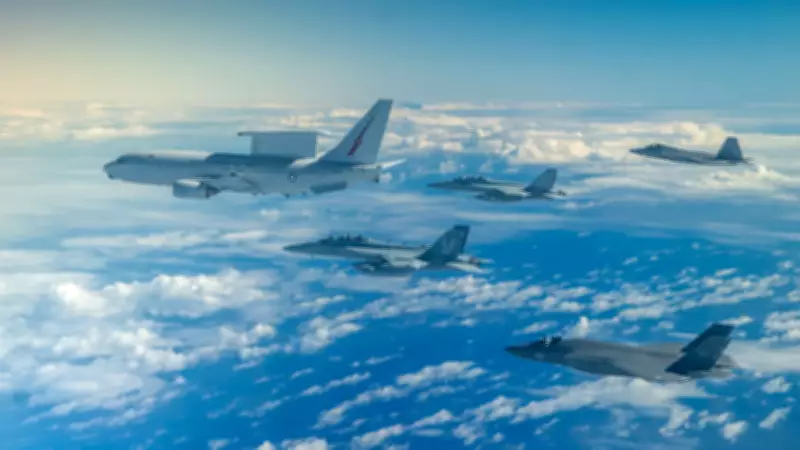
USAF Faces Critical AWACS Shortage After E-3 Sentry Loss in Iranian Attack
The United States Air Force's airborne early warning and control capabilities have been dealt a severe blow following the destruction of an E-3G Sentry AWACS aircraft in a recent Iranian attack on Saudi Arabia. This incident has significantly exacerbated existing concerns about the aging fleet and the delayed replacement program, raising urgent questions about national security readiness.
Fleet Reduction and Aging Infrastructure
The March 27 attack on Prince Sultan Air Base reduced the USAF's operational E-3 Sentry fleet from an original acquisition of 34 systems to just 14 aircraft. According to Boeing, the manufacturer, deliveries of these critical AWACS platforms occurred between March 1977 and June 1984, making even the youngest airframe approximately 42 years old. This aging infrastructure presents mounting maintenance challenges and operational limitations for the Air Force.
E-7A Wedgetail Replacement Program in Limbo
The USAF had initially planned to replace the aging E-3 Sentry fleet with Boeing's E-7A Wedgetail, but this program now faces significant obstacles. The service began with a $1.2 billion contract in 2023 for rapid prototype deployment, followed by a $2.56 billion contract in 2024 for two prototypes based on the Boeing 737-700 NG airframe. Original plans called for procuring 26 aircraft by 2032, with the first delivery scheduled for 2027.

However, the program has encountered criticism from US Secretary of War Pete Hegseth, who in 2025 labeled it as excessively expensive. He advocated for a stopgap solution using the US Navy's E-2D Hawkeye aircraft while pushing for a long-term transition to space-based surveillance assets. Despite this opposition, Congress included protective provisions for the E-7A procurement in the current National Defense Authorization Act.
Capability Gap Concerns and Technological Challenges
Military analysts warn of a potential capability gap as E-3 retirement approaches. While space-based assets offer the promise of persistent surveillance, former USAF chief General David Allvin has noted that the technology hasn't matured sufficiently to replace existing in-service platforms. The E-7 Wedgetail currently serves with Australia, South Korea, and Turkey, with the United Kingdom awaiting its first delivery, demonstrating the platform's international acceptance despite US procurement challenges.
The loss of the E-3 Sentry highlights the pressing need for the USAF to address its AWACS modernization strategy. With an already reduced fleet of aging aircraft and replacement plans facing delays and criticism, military planners must navigate complex procurement decisions while maintaining essential early warning capabilities during a period of heightened global tensions.






