Amid growing scrutiny, the United States Department of Defense has stated it will not release the unedited video footage of military strikes conducted against suspected drug-trafficking vessels in the Caribbean Sea near Venezuela. The decision was announced by US Defense Secretary Pete Hegseth, intensifying a political debate over the administration's actions and rules of engagement.
Lawmakers Demand Details on Secretive Campaign
Secretary Hegseth and Secretary of State Marco Rubio briefed all US senators on Tuesday, December 16, following demands from lawmakers for transparency. The briefing covered a three-and-a-half-month campaign involving more than 20 strikes on boats in waters off Venezuela. According to officials, these operations have resulted in over 80 fatalities. The two cabinet officials were also scheduled to hold a similar session for the full House of Representatives.
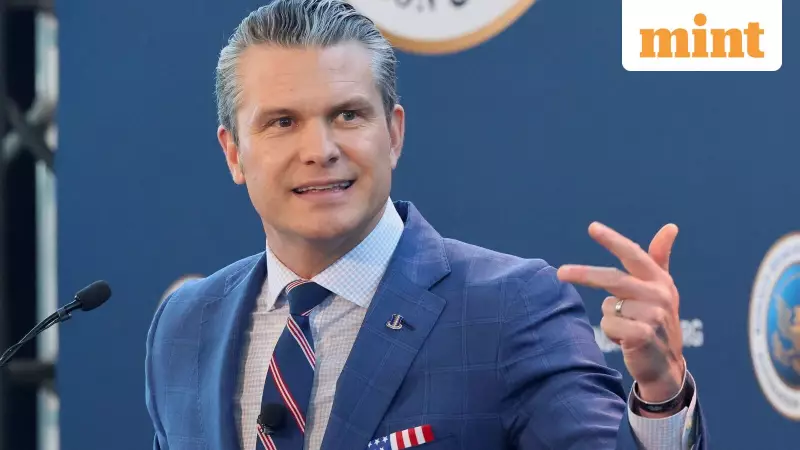
Hegseth defended the refusal to release the video, citing longstanding policy. "In keeping with long-standing Department of War policy, Department of Defense policy, of course we’re not going to release a top-secret full unedited video of that to the general public," he told reporters at Capitol Hill.

Second Strike on Survivors Raises Serious Questions
Concerns among lawmakers and the public have escalated sharply after revelations about the specifics of the September 2 operation. It emerged that the commander overseeing the mission ordered a second strike explicitly to target two survivors from an initial attack. This development has prompted fresh and urgent questions about the rules of engagement governing the campaign and its ultimate strategic objectives.
Democratic leaders expressed deep dissatisfaction with the information provided in the Senate briefing. Senate Democratic Leader Chuck Schumer criticized the session as too brief and lacking in substance. "The administration came to this briefing empty-handed," Schumer stated. He further added, "We don’t know what the ultimate goal is. The president says different things at different times and contradicts himself."
Political Divide: Republicans Back Aggressive Stance
While Democrats raised alarms, Republicans largely rallied behind President Donald Trump's approach. The administration maintains that the operations are aimed at disrupting international drug trafficking networks, which they blame for thousands of American deaths.
Taking a notably hawkish position, Republican Senator Lindsey Graham argued that the campaign should ultimately lead to a change in Venezuela's leadership. "If Maduro is what they say he is, and I believe them, he needs to go," Graham asserted. "It should be the policy of the United States that when this is over, he’s no longer standing."
The incident and the subsequent political fallout highlight the deepening complexities of US involvement in the region and the ongoing tensions surrounding Venezuela's political crisis. The refusal to release visual evidence ensures that scrutiny and debate over the legality and morality of these covert strikes will continue.