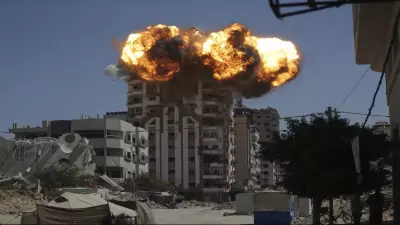
The United States is actively exploring the possibility of conducting military strikes against Iran, specifically targeting its nuclear facilities, according to a report by the Jerusalem Post. This significant development comes amidst escalating regional tensions and follows a direct appeal from Israel for a decisive US response to Iran's advancing nuclear program.
Details of the Reported US Military Evaluation
Citing informed American sources, the Jerusalem Post revealed that the Biden administration is seriously considering military intervention as a viable option. The discussions are reportedly focused on a potential campaign aimed at Iran's nuclear infrastructure. This marks a potential strategic shift in Washington's approach, which has long prioritized diplomacy and sanctions.
The report underscores that this evaluation is a direct consequence of Israel's persistent lobbying efforts. Israeli officials have reportedly presented intelligence and arguments to their American counterparts, emphasizing the perceived urgency of halting Iran's nuclear progress. The dialogue between the two allies on this matter is described as intensive and ongoing.

Context of Escalating Regional Tensions
This news surfaces against a backdrop of heightened instability in the Middle East. The region has been on edge since the conflict between Israel and Hamas began on October 7, 2023. A major point of contention has been Iran's support for proxy groups across the region, which have engaged in hostilities against Israeli and US interests.
Notably, direct military confrontations between Iran and Israel have already occurred. In April 2024, Israel conducted a missile strike on an Iranian facility. Iran retaliated with an unprecedented direct drone and missile attack on Israeli territory. These exchanges have dramatically increased the risk of a wider, full-scale war, making the current US deliberations particularly critical.
Potential Consequences and Global Implications
The mere consideration of US military action against Iran carries profound implications. Such a move would likely trigger a severe escalation, potentially drawing in multiple regional actors and causing significant disruptions to global energy supplies and economic stability.
Analysts point out that an American intervention would represent a major policy departure. The international community, including key powers, would be forced to react. For India, which maintains diplomatic and economic ties with multiple actors in the region, including Iran, the stability of the Middle East is of paramount importance for energy security and the welfare of its large diaspora.
The final decision by the US administration remains uncertain. While the military option is on the table, diplomatic channels and economic pressure are still being utilized. The world now watches closely to see if the US will cross a threshold that could redefine the geopolitical landscape of the Middle East for years to come.