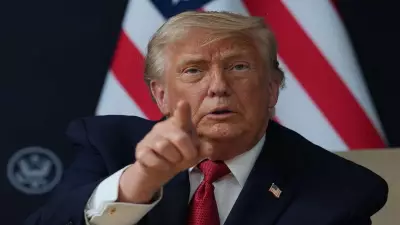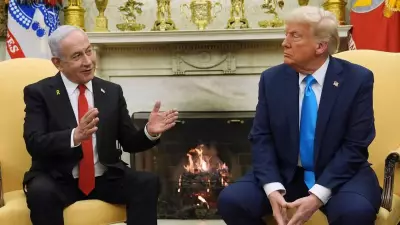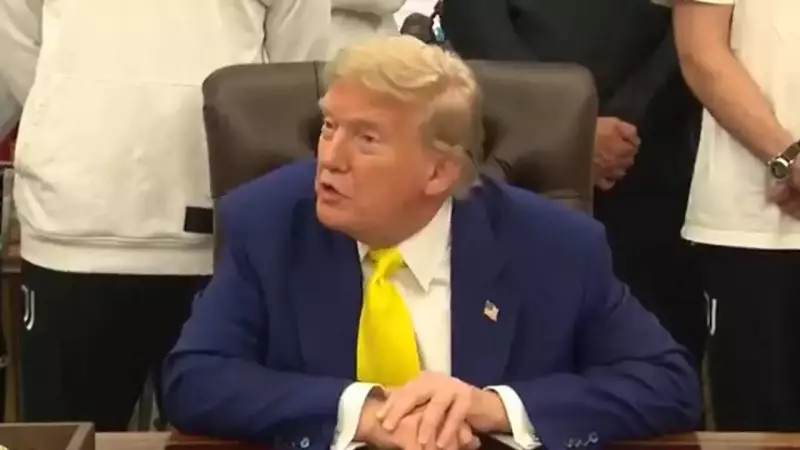
American military commanders have reportedly advised former President Donald Trump that they require additional time to prepare for any potential strikes against Iran. This caution comes amidst another night of widespread and intense protests across the Islamic Republic, which have reportedly surpassed the scale of the 2022 demonstrations.
US Military Prepares Amidst Trump's Threats
According to reports, Donald Trump was briefed on a spectrum of possible targets for military action. These targets reportedly include components of Iran's security apparatus responsible for the violent suppression of ongoing protests. However, commanders in the region have communicated to officials the necessity to "consolidate US military positions and prepare defences" before initiating any strikes. The primary concern is that such action could provoke immediate and severe retaliation from Iran.
Trump has publicly threatened to "get involved" in the unrest that challenges the Iranian regime's stability. He issued a stark warning, stating he would hit Iran "very, very hard, where it hurts" if the crackdown on protesters continues. The briefing presented to him included options for striking non-military targets in Tehran as well as elements of the regime's security forces.

Protests Intensify and Regime's Harsh Response
The protests, which initially erupted over rampant inflation, have now spread to more than 100 cities and towns across all of Iran's provinces. Rights groups reported that approximately 192 people were killed by Sunday morning, though a nationwide internet blackout has made verifying the true toll difficult. Footage emerged showing security forces allegedly using live ammunition against protesters in Abyek, located northwest of Tehran.
The demonstrations have evolved, with protesters now openly demanding an end to the clerical rule of Supreme Leader Ayatollah Ali Khamenei. In a severe response, senior Iranian officials have suggested that protesters should face the death penalty, with one likening them to terrorists. Hospitals are reportedly overwhelmed with patients suffering from gunshot wounds.
Regional Tensions and Potential Retaliation
The situation has escalated regional tensions significantly. On Sunday, Iran's parliamentary speaker, Mohammad Baqer Qalibaf, a former commander in the Islamic Revolutionary Guard Corps (IRGC), issued a direct warning to the White House. He stated that in the event of an attack on Iran, "the occupied territories [Israel] as well as all US bases and ships will be our legitimate targets."
Adding to the speculation, two American C-17A military transport planes were tracked departing Germany and heading towards the Middle East on Saturday evening. Meanwhile, Israel's military was placed on high alert. Israeli Prime Minister Benjamin Netanyahu has repeatedly warned against Iran rebuilding its nuclear or ballistic missile programs. Analysts suggest the IDF could view potential US airstrikes as an opportunity to target its own list of objectives, though Iran would likely retaliate against Israel regardless of its direct involvement.
US officials, cited by The New York Times, emphasized that any military action must be carefully weighed to avoid inadvertently galvanizing public support for the Iranian regime. The regime and its international supporters have claimed the protests are part of a "Zionist" plot, a narrative often used to discredit domestic dissent.