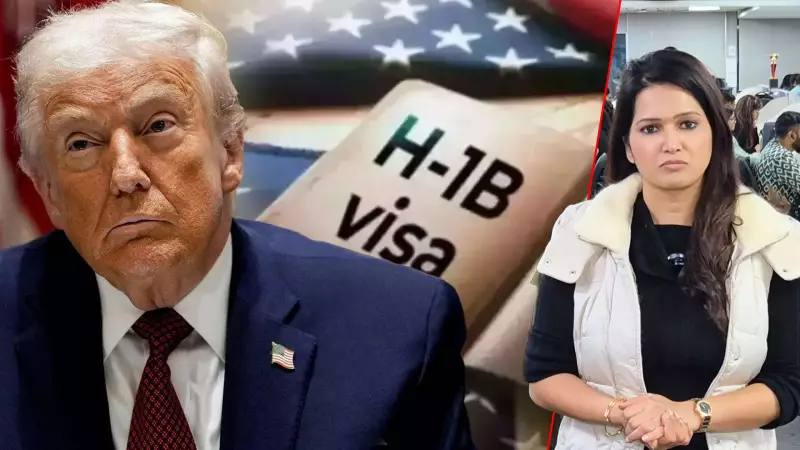
The United States has instituted a significant new requirement for its popular H-1B work visa program, directly impacting thousands of Indian professionals. As of December 2025, applicants for the H-1B visa and its dependent H-4 visa must now submit their social media profiles for mandatory government scrutiny.
Every Post, Like, and Comment Under the Microscope
The new policy effectively transforms personal social media activity into a key filter for visa eligibility. Under the updated rules, applicants are required to make their social media accounts public or provide access to officials for a thorough review. The move aims to conduct enhanced background checks, but it introduces a layer of digital surveillance into the immigration process that was not previously mandatory at this scale.
The rules were announced and came into effect recently, with the news breaking widely on December 15, 2025. The lack of crystal-clear guidelines on what constitutes a red flag on a profile is causing considerable anxiety among applicants and immigration attorneys.

Indian Professionals in the Direct Line of Fire
The community set to be the worst hit by this policy shift is Indian nationals. For years, Indian tech talent has formed the overwhelming backbone of the H-1B program, driving innovation in Silicon Valley and across the American technology sector. This deep reliance means any major change to the visa process disproportionately affects Indian professionals and their families.
With careers and life plans hanging in the balance, the ambiguity is the biggest challenge. Professionals are now left questioning their past online interactions, unsure if an old comment, a shared post, or even a 'like' could jeopardize their visa status and, consequently, their American dream.
Navigating the New Digital Frontier of US Immigration
The implications extend beyond individual anxiety to broader professional and personal realms. The requirement adds a new, time-consuming, and intrusive step to an already complex and competitive application process. For those on H-4 visas—often spouses of H-1B holders—their pathway to living in the US is now similarly subject to this digital vetting.
This policy marks a definitive shift where one's digital footprint is accorded the same weight as traditional background checks. Experts advise prospective applicants to audit their social media history meticulously, review privacy settings, and understand that their online persona is now an official part of their immigration dossier. The era of the US visa application coming with attached digital surveillance has formally begun.