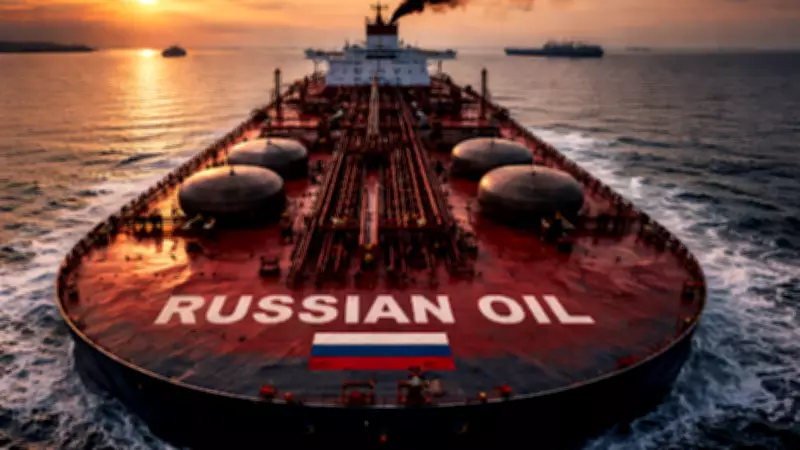
US Reverses Course, Grants New Waiver for Russian Oil Purchases
In a significant policy shift, the United States administration has opted to extend a limited window for international buyers to acquire Russian oil shipments that are already at sea. This decision comes despite earlier indications from officials that such relief measures would not be continued, highlighting the complexities of managing global energy dynamics amid ongoing conflicts.
Details of the New License and Its Implications
Late on Friday, the US Treasury Department issued a fresh license, providing a roughly month-long waiver. This authorization permits nations to purchase Russian oil and petroleum products that were loaded onto vessels as of Friday, with the provision set to expire at 12:01 am (0401 GMT) on May 16. This new measure replaces the previous 30-day waiver that lapsed on April 11, offering a brief reprieve in the face of tightening global supplies.
The move represents a stark reversal from comments made just two days earlier by Treasury Secretary Scott Bessent, who had explicitly stated that Washington would not renew waivers covering Russian or Iranian oil. "We will not be renewing the general license on Russian oil," Bessent asserted, adding, "That was oil that was on the water prior to March 11, so all that has been used." This about-face underscores the administration's efforts to balance geopolitical pressures with economic stability.

Broader Context: Energy Market Volatility and the US-Israeli War Against Iran
These waivers are part of a broader strategy to mitigate volatility in energy markets, which has been exacerbated by the ongoing US-Israeli war against Iran. Since the conflict began on February 28, it has severely disrupted energy supplies worldwide. Following joint US and Israeli strikes on Iran, the country extended its control over the crucial Strait of Hormuz, a key maritime chokepoint. This action has effectively drained global oil and gas shipments, as prior to the war, approximately one-fifth of the world's energy flows passed through this route.
As supplies have been squeezed, oil prices have surged, impacting economies across the globe and placing additional strain on countries heavily reliant on energy imports. The earlier waiver, issued on March 20, enabled around 140 million barrels of Iranian oil to reach global markets, helping to alleviate some supply pressures, according to Bessent. That arrangement is scheduled to expire on Sunday, adding urgency to the current situation.
Criticism and Market Impact
The renewed relief for Russian shipments has sparked criticism from US lawmakers across party lines. Critics argue that such measures risk inadvertently supporting economies engaged in conflicts with Washington and its partners, potentially undermining broader geopolitical objectives.
On the market front, Russian presidential envoy Kirill Dmitriev had previously informed Reuters that the original waiver could release up to 100 million barrels of Russian crude into the global market. This volume is close to a full day of worldwide production, highlighting the significant impact such decisions can have on energy availability and pricing.
In summary, the US extension of the waiver for Russian oil shipments reflects a pragmatic approach to managing immediate energy crises while navigating complex international relations. As global tensions persist, such policy adjustments will continue to play a critical role in stabilizing markets and supporting economic resilience.