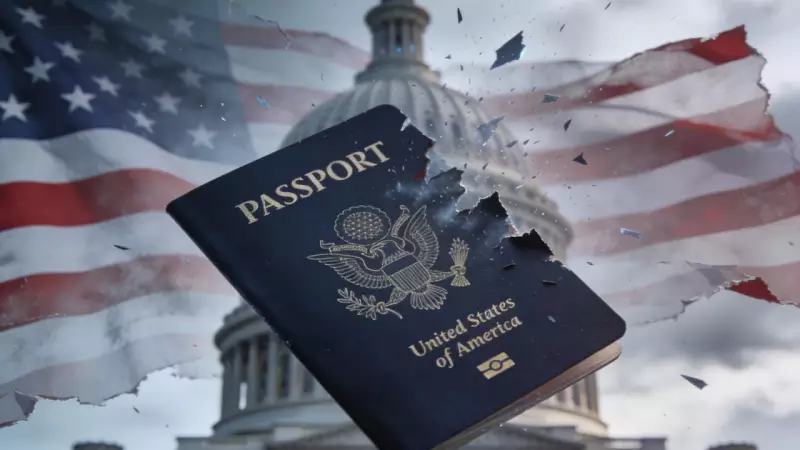
The administration of former US President Donald Trump has significantly intensified a campaign to strip American citizenship from naturalized immigrants. Internal guidance directs the US Citizenship and Immigration Services (USCIS) to ramp up efforts, aiming to refer 100 to 200 denaturalization cases per month to the Justice Department by fiscal year 2026.
What the New Guidance Mandates
According to the recently reported directive, USCIS field offices must now prioritize individuals who allegedly obtained citizenship unlawfully through fraud during the naturalization process. This move marks a dramatic escalation of a legal tool historically used sparingly. The push follows a Justice Department memo from June 2025 that listed denaturalization as a top enforcement priority, focusing on individuals linked to gangs, drug cartels, financial fraud, and violent crime.
However, the introduction of numerical quotas has sparked alarm among immigration advocates. They fear the policy could lead to overreach, particularly amid rising anti-immigrant rhetoric in MAGA-aligned circles. Citizens from countries with high naturalization rates, including Mexico, India, Vietnam, and the Philippines, are seen as potentially vulnerable targets.

Indian Diaspora in the Crosshairs
Data underscores why the Indian community is watching closely. In 2023 and 2024, India was the second-largest source country for new American citizens, with 49,700 and 59,050 naturalizations respectively. Only Mexico recorded higher numbers. Overall, the United States is home to approximately 26 million naturalized Americans, with up to one million foreign-born immigrants qualifying for citizenship each year.
Federal law permits denaturalization only under strict conditions. The government must prove in federal court that citizenship was secured through "material fraud or misrepresentation," concealment of key facts, or involvement in specific disqualifying acts like terrorism or war crimes. The legal burden is high, requiring "clear, unequivocal, and convincing" evidence.
From Rare Tool to Blunt Instrument?
Historically, denaturalization has been exceptionally rare. From 1990 to 2017, the US averaged only about 11 cases per year. During Trump's first term, just over 100 cases were filed across four years, compared to 24 under the Biden administration. In 2025, the Justice Department pursued 13 cases, winning eight. The new targets—which could lead to up to 2,400 referrals annually—represent a seismic shift in scale.
Administration officials defend the policy as essential to protect the integrity of citizenship. USCIS spokesperson Matthew Tragesser framed it as part of an ongoing "war on fraud," targeting those who lied or misrepresented themselves, especially under prior administrations. Supporters argue existing laws have been underenforced for too long.
Critics, including former USCIS officials, vehemently disagree. Sarah Pierce, a former policy official, criticized the "arbitrary numerical targets," warning they could transform a "serious and rare tool into a blunt instrument." Amanda Baran, a senior official under President Biden, stressed that citizenship is "too precious and fundamental to our democracy" to be governed by enforcement metrics.
Civil liberties groups echo these concerns. Margy O’Herron of the Brennan Center for Justice cautioned that high-volume targets, akin to those in deportation drives, could result in errors and instill fear among naturalized citizens. Advocates warn the policy may create a chilling effect, fostering a two-tier system of citizenship and undermining the sense of security for millions of Americans born abroad.