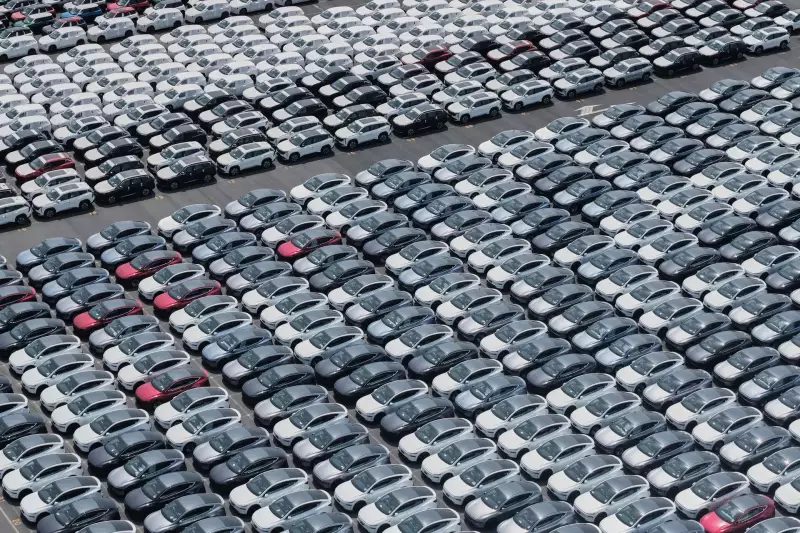
Security and economic anxieties over the rapid global expansion of China's automobile industry, which have been simmering in Europe, are now resonating loudly in the power corridors of the United States. Lawmakers and experts are raising urgent alarms, framing the influx of Chinese-made vehicles as a dual threat to both national security and the future of the American auto sector.
The 'Trojan Horse' Warning: US Congressional Hearing Sounds Alarm
At a recent high-stakes Congressional hearing titled “Trojan Horse: China’s Auto Threat to America,” members of the House Select Committee on China delivered stark warnings. Committee chairman John Moolenaar asserted that Beijing's position as the world's top auto exporter is not a simple market success but “a political project of the CCP.” He argued this dominance is built on massive state subsidies, control over critical supply chains, and predatory practices that Western companies cannot compete against.
The hearing prominently highlighted espionage risks. Moolenaar described modern vehicles, packed with sensors and connectivity, as “potential spy platforms with a kill switch inside.” He warned that data from cameras and microphones could be siphoned, and entire fleets could be remotely disabled by Beijing during a geopolitical crisis, potentially blocking roads and crippling logistics.

Ranking Member Raja Krishnamoorthi focused on the economic dimension, noting Chinese EVs are often priced “below what it would even cost to make a car.” With electric vehicles projected to constitute 60% of global new car sales by 2040, he framed the struggle as a battle for future market ownership. Expert witnesses echoed these concerns. Elaine Dezenski of the Foundation for Defence of Democracies cited practices like forced technology transfer and price manipulation, while Peter Ludwig equated the physical risk from Chinese cars to the digital risk from apps like TikTok, warning that dependence would be hard to reverse.
Europe's Parallel Panic: Buses with a 'Kill Switch'
Across the Atlantic, European nations are grappling with similar fears, particularly regarding public transport. Authorities in Denmark and Norway are urgently investigating a security loophole discovered in their fleets of electric buses manufactured by Yutong, the world's largest bus maker by sales.
The core concern is the vehicles' connectivity. Jeppe Gaard, COO of Danish transport provider Movia, explained that since these buses receive over-the-air updates, they could theoretically be “stopped remotely, either by the manufacturer or by a hacker.” This vulnerability turns essential public infrastructure into a potential point of sabotage. The alarm was first raised by Norway's major operator, Ruter, which runs half the country's public transport.
A Converging Front: Economic and Security Threats Entwined
The narrative forming in both Washington and European capitals presents a unified view: the rise of Chinese automobiles is a strategic challenge. Officials like EU digital chief Margrethe Vestager, who has called cars “computers on wheels,” see the vast amounts of Chinese-built infrastructure as a potential weapon that could be immobilized or commandeered during tensions.
The response is now shifting from concern to action. While European agencies probe specific vulnerabilities, US lawmakers are pressing for strict restrictions to prevent Chinese automakers from gaining a foothold. The overarching fear is that losing the electric vehicle market could decimate a cornerstone of Western industry while embedding critical security vulnerabilities within their own societies.