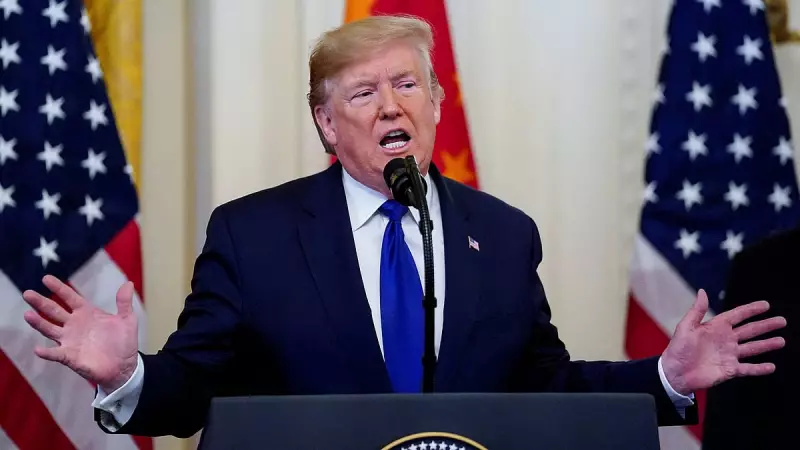
Former US President Donald Trump has ignited a fresh political firestorm with derogatory comments directed at the Somali community, drawing sharp criticism from opponents and an unusual silence from within his own party. The incident, which unfolded in early December 2025, saw Trump using language described as offensive and inflammatory, prompting immediate backlash and a hurried attempt at damage control.
The Controversial Rhetoric and Immediate Fallout
During a public appearance, Trump referred to Somalis using the term "garbage." The remark was met with cheers from some supporters present but quickly reverberated beyond the room, causing widespread alarm. Critics, including political analysts and human rights advocates, condemned the language as divisive and harmful, highlighting its potential to fuel xenophobia and discrimination.
The reaction from the Republican party was notably muted, with many prominent figures choosing to remain silent in the immediate aftermath. This silence from the GOP stood in stark contrast to the vocal condemnation from Democratic lawmakers and several civil society organizations. The controversy dominated news cycles, shifting focus to issues of rhetoric and racial sensitivity in American politics.

Damage Control and Denials
Facing a growing wave of outrage, Donald Trump moved swiftly to contain the fallout. In a post on his preferred social media platform, the former president directly denied having used the specific words attributed to him. This attempt at clarification, however, did little to quell the criticism from those who argued the incident reflected a broader pattern of rhetoric.
Notably, the condemnation was not entirely partisan. Several Republican lawmakers broke ranks to publicly criticize the language, labeling it as offensive and unbecoming of a national leader. This internal criticism underscored the divisive nature of the remarks even within Trump's political base.
Broader Implications and Political Repercussions
The episode, dated 04 December 2025, raises significant questions about the tone of political discourse in the United States. Analysts suggest that the administration's initial cheers and the subsequent Republican silence could have implications for the party's standing with immigrant communities and moderate voters. For critics, the event is a clear alarm bell about the normalization of harsh rhetoric against specific ethnic groups.
The international wire service Reuters reported on the developing story, capturing the sequence of events: the initial remark, the mixed reaction, the ensuing outrage, and the final denial. The story continues to develop as political figures and commentators weigh in on the lasting impact of such statements on the country's social fabric and its global image.
As the dust settles, the key takeaways remain the powerful reaction from critics, the fractured response from Republicans, and the ongoing debate about the boundaries of acceptable political speech in a diverse democracy.