Old Gold Recycling Emerges as Key Strategy Amid Soaring Prices in Twin Cities
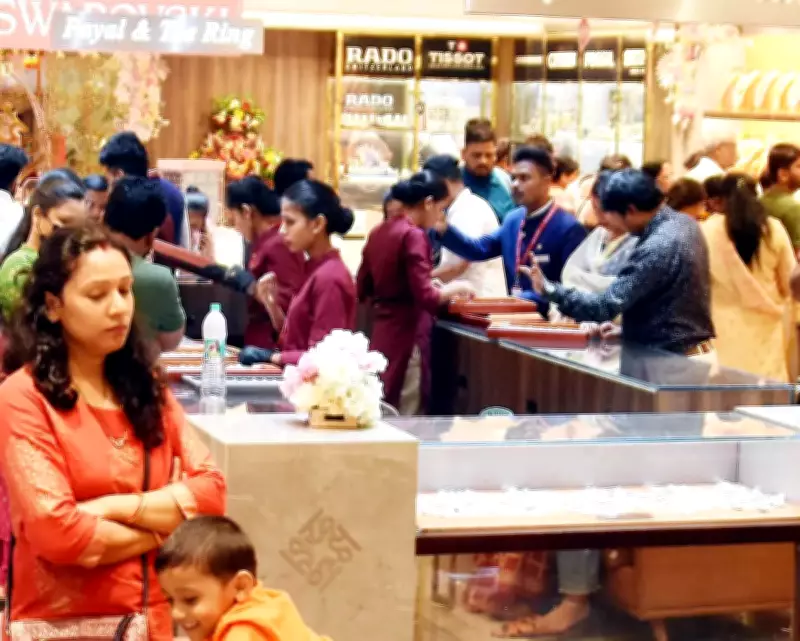
In the face of a sustained surge in gold prices, residents of Bhubaneswar and Cuttack are turning to their old ornaments as a practical solution to offset the escalating costs of new jewellery purchases. Jewellers across the twin cities have observed a significant shift in consumer behavior, with persistently high gold prices since last year dramatically affecting sales volumes and purchasing power. This economic pressure has prompted a growing number of buyers to opt for recycling their existing gold rather than investing in entirely new pieces.
Significant Portion of Sales Now Driven by Exchanges
Sourav Roy, Secretary of the Odisha Jewellers Association, revealed that approximately 40% of gold jewellery sales currently originate from the recycling of old gold. "Customers are exercising greater caution with their expenditures and are strategically utilizing old ornaments to navigate the challenging landscape of rising prices," he explained. This trend marks a departure from traditional purchasing patterns, where outright buying was more common.
Price Volatility and Consumer Adaptation
Following a record-breaking increase, gold prices experienced a brief decline for four consecutive days from January 30 to February 2. However, they rebounded sharply on February 3 and 4, climbing by nearly Rs 600 per gram each day. As of Wednesday, the price of 24-carat gold stood at Rs 16,053 per gram, while the 22-carat variant was priced at Rs 14,715 per gram.

Sasmita Rout, a resident of Nayapalli, shared her experience: "Despite the fluctuations in gold prices, purchasing new gold remains prohibitively expensive. For my daughter's wedding next month, we bought a few daily-wear items, but we could only afford the heavier jewellery by exchanging my old and broken ornaments. This approach resulted in substantially lower costs than we had initially anticipated."
Traditional Hubs Witness Changing Dynamics
The trend is equally prominent in Cuttack's established jewellery hubs. A jeweller at Nayasadak noted, "Previously, customers would typically buy gold outright for weddings and other occasions. Nowadays, almost every client inquires about the exchange value first before considering new purchases." This shift underscores the broader economic adjustments consumers are making in response to market conditions.
Jewellers Introduce Attractive Exchange Policies
To cater to this evolving demand, jewellery outlets throughout Bhubaneswar and Cuttack are implementing zero price and weight deduction policies for old gold exchanges across both 22- and 24-carat categories. For jewellery falling under the 916 hallmark category, no deductions are applied. In cases involving unhallmarked jewellery, purity is tested, and customers are permitted to exchange the detected weight or more without incurring making charges.
Revised Purchase Schemes Reflect Market Realities
Concurrently, jewellers have overhauled their gold purchase schemes, emphasizing zero making charges in light of rising prices. The previously popular 11+1 months investment scheme, where consumers paid fixed monthly instalments for 11 months with the jeweller contributing one month's instalment in the 12th month, has been discontinued due to its increasing unviability.
Bansidhar Samal, a Bhubaneswar-based jeweller, elaborated on the new approach: "We are currently offering a zero making charge scheme where customers make monthly instalments over 12 months and can subsequently purchase gold without any making charges." However, Roy added that demand for this revised scheme has not been particularly encouraging. Typically, making charges for 10 grams of gold range between 10% and 25%.
This comprehensive adaptation by both consumers and jewellers highlights the profound impact of gold price volatility on the local jewellery market, fostering innovative strategies to sustain transactions amidst economic pressures.