Trump's Multifaceted Defense of Devastating Iran Air Strikes
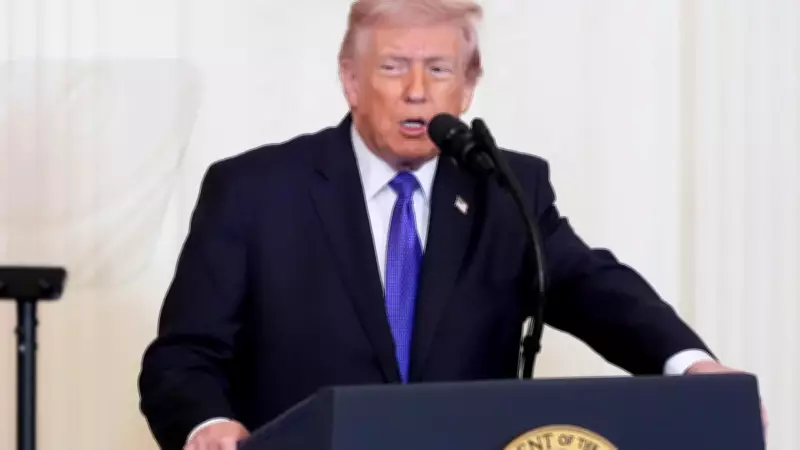
In a series of high-profile interviews with US media outlets, President Donald Trump has presented a complex and sometimes contradictory array of justifications for initiating "Operation Epic Fury," the aggressive air campaign that resulted in the death of Iran's Supreme Leader Ali Khamenei. The operation, which has sparked widespread domestic and international concern, was described by Trump in stark terms during a call with ABC News, where he bluntly stated, "I got Khamenei before he got me," alleging prior Iranian assassination attempts against him.
A Triple-Threat Rationale for Escalation
Trump elaborated on his decision through various channels, weaving a narrative that included three primary threats from Iran. He claimed access to "specific, highly classified intelligence" indicating an Iranian cell was on the verge of an assassination attempt on US soil. Additionally, he asserted that Iran was interfering in US elections, and most urgently, repeated in interviews with CNBC and The Washington Post that Iran was "weeks, maybe days" away from developing a functional nuclear warhead. However, these allegations lack publicly disclosed evidence from intelligence agencies, leading critics to accuse the President of gaslighting the public to justify regime change, allegedly influenced by Israel and Saudi Arabia.
Public Opinion and Strategic Messaging
Polls reveal that a majority of Americans oppose military action against Iran, with only about one in four, primarily Republicans, supporting Trump's stance. In response, the President has embarked on a strategic effort to saturate the news cycle with his version of events, conducting numerous interviews and social media posts to "flood the zone" before domestic opposition solidifies. This approach allows him to tailor messages: emphasizing "freedom for the Iranian people" to liberal outlets like The Atlantic, while highlighting aggressive actions such as "annihilating their navy" to conservative audiences on Fox News.

Inconsistencies and Post-Strike Scenarios
Trump's messaging has exposed significant inconsistencies. Initially, he compared the operation to the "Venezuela model," suggesting a swift power transition, but later admitted to CNN that the strikes were so effective they had "knocked out most of the candidates" for succession, leaving a leadership vacuum. He boasted to ABC, "Nobody else could have done this but me," showcasing his trademark bravado. Trump also revealed contact from surviving Iranian leaders and floated sanctions relief for a "pragmatic" successor, while proposing competing post-Khamenei scenarios: the Islamic Revolutionary Guard Corps surrendering weapons, a Venezuela-style decapitation, or a popular uprising by Iranians.
The Decapitation Paradox and Ongoing Conflict
The elimination of Iran's top leadership has created a paradox, contradicting Trump's calls for Iranians to "take back their country" without a clear successor in place. Military analysts view his four-week timeline for resolution with skepticism, fearing the US has entered an open-ended conflict without a backup plan. Despite ongoing bombardments, Trump maintains an image as a negotiator, claiming that remaining Iranian officials "want to talk," even as Tehran's Supreme National Security Council denies any dialogue agenda. In a social media post, he boasted, "They want to talk. I said 'Too Late!'"
Fluid Messaging and Global Implications
By alternating between roles as a vindictive commander and a peace-seeking dealmaker, Trump aims to cover all outcomes: if the regime falls quickly, he claims a historic victory; if the war prolongs, he points to "imminent threats" neutralized to protect American lives. As the world watches, the US President continues to narrate the conflict in real-time through phone calls and social media, shaping perceptions amid uncertainty and scrutiny.