In a significant intervention on global security matters, former United States President Donald Trump has issued a stark warning to Iran, signaling the possibility of a military strike against the nation if he returns to the White House. Simultaneously, he called for the Palestinian militant group Hamas to lay down its arms.
Trump's Direct Warning to Tehran
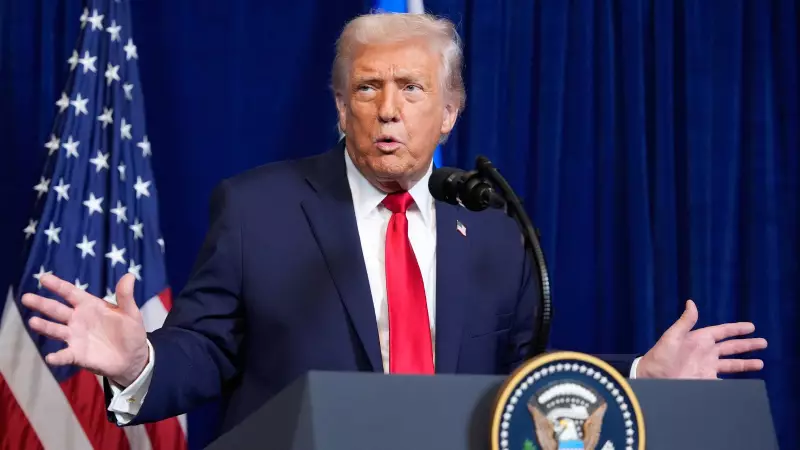
Speaking from the campaign trail, Trump addressed the escalating tensions in the Middle East with characteristic bluntness. He stated that if he is re-elected as President, the US would not hesitate to take decisive action against Iran. His comments come amidst ongoing concerns over Iran's nuclear program and its support for proxy groups across the region.
"We made them behave," Trump claimed, referring to his previous term in office. "But now, they are causing trouble again. They know what will happen if I am President. We will not wait for them to act." While he did not specify the exact nature of the potential strike, his language strongly implied a military option is on the table. Analysts suggest this rhetoric is aimed at projecting strength and contrasting his approach with the current Biden administration's policies.

Call for Hamas to Disarm
In the same breath, the former President turned his attention to the Gaza-based group Hamas. Trump explicitly urged the organization to disarm, linking regional stability to its actions. "Hamas must disarm for any real peace to be possible," he asserted. This statement aligns with long-standing Israeli and US demands but is delivered at a time when ceasefire negotiations remain fragile and the conflict continues to exact a heavy humanitarian toll.
Trump's dual focus on Iran and Hamas underscores a view of the Middle East where these two actors are centrally linked to instability. He portrayed a potential confrontation with Iran as a necessary step to protect American interests and allies, particularly Israel.
Political Context and Global Reactions
These remarks were made as part of Trump's vigorous campaign for the 2024 presidential election. Foreign policy, especially regarding adversaries, forms a core part of his political platform. The warnings are likely to resonate with his domestic base while causing concern among international observers and diplomats seeking to de-escalate regional tensions.
Reactions from global capitals have been cautious. European allies, often wary of escalatory language towards Iran, are monitoring the situation. Within the Middle East, Trump's statements are expected to be welcomed by some Gulf states and Israel, but viewed with alarm in Tehran and by groups like Hamas and Hezbollah.
The timing is critical, as the world grapples with the aftermath of the October 7 attacks and the subsequent war in Gaza. Trump's positioning suggests a return to a more confrontational 'maximum pressure' strategy against Iran, a reversal of recent diplomatic efforts.
As the US election cycle intensifies, such foreign policy declarations will continue to shape the global geopolitical landscape. Trump's latest warnings place the potential for renewed US-Iran confrontation and the future of the Israel-Hamas war firmly into the campaign discourse, with significant implications for international security.