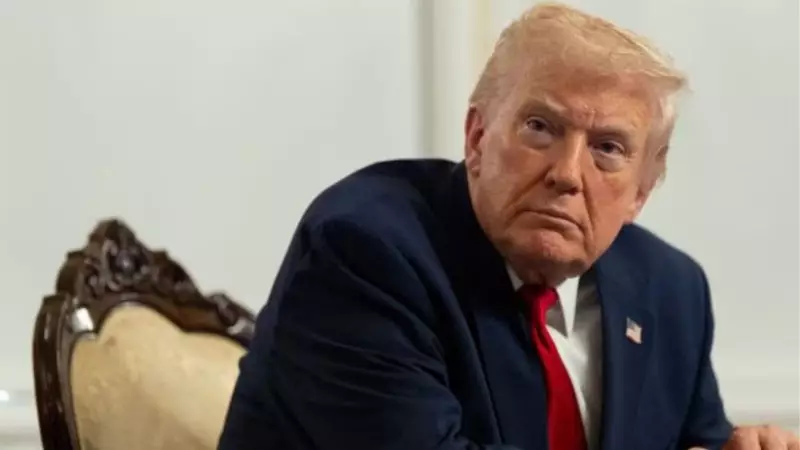
Former United States President Donald Trump has publicly described the ongoing war in Ukraine as "a mess," casting doubt on the ease with which the protracted conflict can be brought to an end. His comments, made during a recent interview, underscore his critical stance on current American foreign policy and hint at his potential approach should he return to the White House.
Trump's Critical Assessment of the Conflict
In his remarks, Trump did not mince words. He characterised the situation in Ukraine as a complex and difficult problem. The former president stated that the war is "not easy to resolve," suggesting that the path to peace is fraught with challenges. This assessment comes amidst a critical phase in the conflict, with Ukrainian forces facing renewed Russian offensives and challenges in securing continued military aid from Western allies.
Trump's critique extended to the administration of President Joe Biden. He implied that the current leadership's strategy has exacerbated the situation, leading to the current stalemate. While he reiterated his frequent claim that the war would never have started under his watch, he stopped short of detailing a specific, actionable plan to end the hostilities immediately. His focus remained on the perceived failures of the present approach.

The Shadow of a Potential Return to Power
These statements carry significant weight as Trump is the presumptive Republican nominee for the 2024 US presidential election. His views on Ukraine are being closely scrutinised by global leaders, allies in Europe, and of course, by the warring nations themselves. There is a palpable concern in Kyiv and many European capitals that a second Trump presidency could lead to a dramatic shift in US support for Ukraine, potentially pushing for a quick settlement that might favour Russian interests.
Throughout his campaign, Trump has often boasted about his relationship with Russian President Vladimir Putin, suggesting he could negotiate a deal between the two nations. However, his latest comments provide little concrete detail on what such a negotiation would entail. The ambiguity itself is a strategic element, keeping both allies and adversaries guessing about his true intentions.
Global Implications and Reactions
The reaction to Trump's comments is likely to be mixed. Critics argue that labelling the war a "mess" oversimplifies a brutal war of aggression and could undermine the morale of Ukraine and its supporters. They fear it signals a willingness to pressure Ukraine into concessions for the sake of a deal. Supporters, however, may see it as a pragmatic acknowledgment of the war's devastating toll and the need for a different strategy to end the bloodshed.
The timing of his statement is also crucial. It arrives as the US Congress has finally passed a major aid package for Ukraine after months of delay, a package that many Republicans aligned with Trump initially opposed. His continued scepticism could influence the future of such aid if he wins the November election.
Furthermore, European nations, who have shouldered a significant burden in supporting Ukraine, are now forced to consider a future where American commitment is not guaranteed. This could accelerate European initiatives for greater strategic autonomy and defence self-reliance, a long-discussed goal that may gain urgent, new momentum.
Looking Ahead: Uncertainty and Strategy
In conclusion, Donald Trump's dismissal of the Ukraine war as "a mess" and his assertion of its complexity is more than just campaign rhetoric. It is a clear signal of his foreign policy leanings and a potential preview of a seismic shift in America's role on the world stage. For now, it injects a new layer of uncertainty into an already volatile global security environment.
The world watches as the 2024 US elections approach, knowing that the outcome could fundamentally alter the course of the Russia-Ukraine conflict. The statements from the likely Republican candidate ensure that his foreign policy, particularly regarding this war, will remain a central and contentious issue in the months to come.