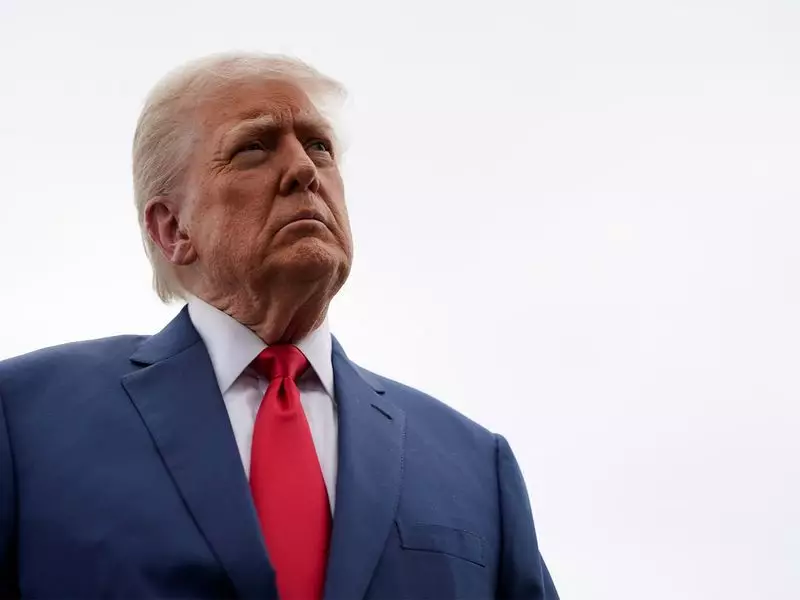
In a stunning revelation, former US President Donald Trump has provided a detailed, first-hand account of the military operation that culminated in the capture of Venezuela's President Nicolás Maduro. Trump stated he watched the pivotal events unfold in real-time, describing the mission as something he had never witnessed before.
Trump's First-Hand Account of the Operation
Donald Trump disclosed his direct involvement in monitoring the operation that targeted the Venezuelan leader. "I watched it in real-time, every aspect of it," Trump asserted, emphasizing the unprecedented nature of the mission. He expressed profound amazement at the execution, noting, "I've never seen anything like this." His comments confirm the high-level US oversight of the strikes that directly facilitated Maduro's apprehension.
The operation, which marks a significant escalation in the long-standing political conflict between the United States and the Venezuelan government, was carried out with precision. Trump's narrative underscores the strategic planning and immediate action taken by US forces, which he observed as events transpired on the ground.

The Context and Execution of the Strikes
The military action followed years of strained relations and sanctions against Maduro's regime, which the US and numerous other nations have accused of authoritarianism, human rights abuses, and economic mismanagement. The Trump administration, and later the Biden administration, had recognized opposition leader Juan Guaidó as the legitimate interim president of Venezuela.
The precise details of the strikes' location and the specific units involved remain under wraps for operational security. However, the outcome was clear: the successful detention of President Nicolás Maduro. This event is poised to create a massive power vacuum and trigger considerable political upheaval within the South American nation, potentially altering its geopolitical alignment.
Potential Repercussions and Global Reaction
The capture of a sitting head of state by foreign military action is a rare and momentous event in modern international relations. It is expected to draw sharp reactions from global powers.
Russia and China, key allies and financial backers of Maduro's government, are likely to condemn the action in the strongest terms, potentially leading to diplomatic confrontations at the United Nations Security Council. Within Latin America, reactions will likely be split between governments that opposed Maduro and those that still support his socialist administration.
The immediate consequences for Venezuela are profound:
- A potential leadership crisis and struggle for power within the ruling party.
- The possibility of widespread civil unrest or violence between government loyalists and opposition supporters.
- Uncertainty regarding the control of Venezuela's vast oil reserves, the largest in the world.
- Questions about the legal and political process Maduro will face following his capture.
Trump's decision to publicly share his role in observing the operation adds a significant personal dimension to the story, highlighting the event's importance in US foreign policy legacy. It also sets a dramatic precedent for future interventions in cases of regimes considered adversarial by Washington.
As the world digests this news, the focus now shifts to the next steps: who will lead Venezuela, how will its institutions respond, and what will be the long-term stability of a region already grappling with complex challenges. The real-time watch by a former US president has now become a defining moment in hemispheric history.