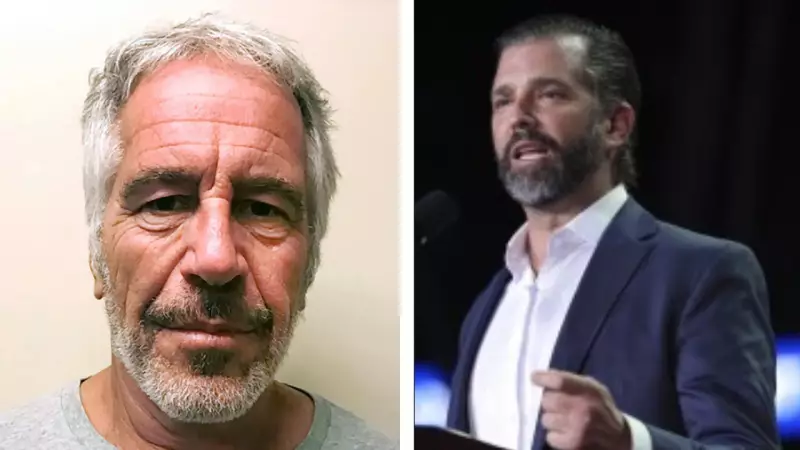
Trump Jr Enters Epstein Files Controversy with Bold Claims
Donald Trump Jr, the eldest son of former President Donald Trump, has stepped into the heated debate surrounding the impending release of Jeffrey Epstein documents with surprising revelations. Through social media platform X, Trump Jr claimed that newly public emails demonstrate the convicted pedophile harbored significant animosity toward his father.
"It's clear from all the emails that Jeffrey Epstein hated Trump... so much so that he literally was literally live texting Democrats on how to impeach him," Trump Jr posted. He further argued that "If he had anything on Trump he would have used it!" while raising questions about why a convicted pedophile maintained direct communication with Democrats.
Congress Forces Public Disclosure in Overwhelming Vote
The political drama unfolds as Congress took decisive action to ensure full public disclosure of all unclassified records related to Epstein and his associate Ghislaine Maxwell. The House of Representatives demonstrated rare bipartisan unity, passing the legislation with an overwhelming 427-1 vote. Only Republican Representative Clay Higgins opposed the measure.

The Senate followed suit, approving the bill through a unanimous consent agreement that cleared procedural hurdles. The legislation now advances to President Donald Trump's desk for final approval. Despite initial resistance and days of denial, the President has confirmed he will sign the bill into law.
Trump's Reversal and Justice Department Timeline
President Trump's position on the Epstein documents has undergone significant evolution. For months, he resisted disclosure efforts, dismissing the matter as a "hoax." However, in a sudden policy reversal on Sunday, he urged his MAGA supporters and Republican allies to back the disclosure bill.
A senior White House official confirmed that the president plans to review the bill immediately upon receipt. Once signed, the Justice Department will have exactly 30 days to release the documents, though redactions will be implemented to protect victims' identities.
Even while supporting the bill's passage, President Trump has expressed frustration about the continued focus on Epstein, characterizing it as a trivial matter being exploited by Democrats to distract from his administration's accomplishments.