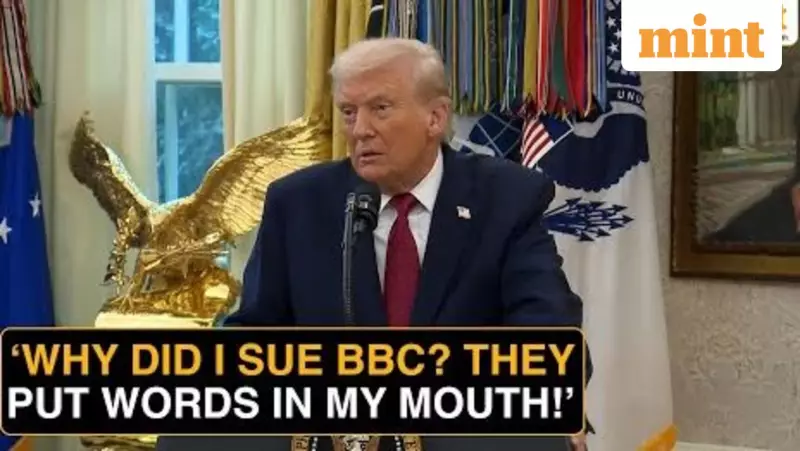
Former US President Donald Trump has initiated a massive defamation lawsuit against the British Broadcasting Corporation (BBC), seeking a staggering $10 billion in damages. The legal action, filed in December 2025, centres on edited video clips of Trump's speech on January 6, 2021, which the lawsuit claims falsely portrayed him as directly inciting supporters to storm the US Capitol.
The Core of the Legal Dispute
The lawsuit alleges that the BBC defamed Trump by splicing together sections of his January 6 address. The edited broadcast reportedly combined his statement telling supporters to "march on the Capitol" with another where he said "fight like hell." Crucially, the edit omitted a part of the speech where Trump explicitly called for peaceful protest. This selective editing, according to Trump's legal team, created the mistaken impression that he was directing his followers towards violent action at the Capitol building.
Beyond defamation, the suit also invokes a Florida state law that prohibits deceptive and unfair trade practices. Trump is seeking $5 billion in damages for each of the two counts outlined in the lawsuit, bringing the total claim to an unprecedented $10 billion. This move opens an international front in Trump's long-standing battle against media outlets he accuses of unfair coverage.

BBC's Response and Admission
In a significant development, the BBC has publicly responded to the allegations. The broadcaster has apologised to Donald Trump and acknowledged an error of judgment in its editing process. It admitted that the shortened version of the speech gave viewers the wrong idea, suggesting a direct call for violence that was not present in the full context.
However, despite this apology and admission, the BBC has stated clearly that it believes there is no legal basis for the lawsuit. This sets the stage for a potentially protracted and high-profile legal battle between a former US president and one of the world's most renowned public service broadcasters.
Broader Implications and Context
This lawsuit is not an isolated incident but part of a wider pattern. Trump has repeatedly clashed with major media organisations, labelling critical coverage as "fake news." The case raises profound questions about media responsibility, editing ethics, and the legal limits of free speech across international borders. The reference to "AI or something" in the initial reports highlights the growing public suspicion and complexity surrounding digital content manipulation.
The outcome of this $10 billion suit could set a major precedent for how edited media footage is treated in defamation cases, especially when it involves influential political figures and cross-jurisdictional media entities. The world will be watching closely as this legal drama unfolds.