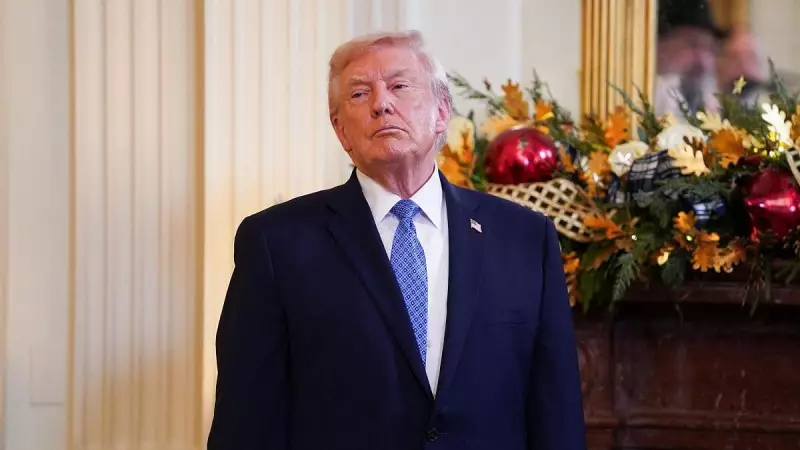
In a significant move impacting global travel and immigration, US President Donald Trump has announced a major expansion of his administration's controversial travel restrictions. The new policy extends the existing ban to include citizens from seven additional countries, a decision that has immediate international ramifications.
Which Countries Are Now on the Restricted List?
The updated proclamation, signed by President Trump, adds seven nations to the list of countries facing stringent travel limitations to the United States. The newly included countries are Syria, Palestine, Sudan, Tanzania, Eritrea, Nigeria, and Kyrgyzstan. This expansion builds upon the original travel ban that was first instituted in 2017 and has been a cornerstone of the Trump administration's immigration policy.
The restrictions are not uniform across all seven nations. The specifics vary, with some countries facing bans on certain types of visas. For instance, the ban on nationals from Sudan and Tanzania applies specifically to the Diversity Visa lottery program, which grants up to 50,000 immigrant visas annually to individuals from countries with low rates of immigration to the US. For other nations, the restrictions are more comprehensive, limiting various immigrant and non-immigrant visa categories.

Rationale and Immediate Implications
The White House justification for this expansion centers on national security concerns. Administration officials cited deficiencies in the identity-management and information-sharing protocols of the affected countries. According to the proclamation, these nations have failed to meet US security and information-sharing benchmarks, which are designed to prevent terrorists and criminals from entering the United States.
The policy takes effect on February 21, 2020. It is crucial to note that the restrictions primarily target new visa applicants. The US State Department has clarified that existing valid visas will not be revoked. Furthermore, lawful permanent residents of the United States (green card holders), foreign nationals who have been granted asylum, and refugees already admitted to the country are exempt from these new rules.
This move has profound implications for families, students, and professionals from the listed nations who had plans to travel or immigrate to the United States. It effectively halts a major pathway for immigration and travel, impacting thousands of individuals directly.
Global Reaction and Political Context
The expansion has been met with swift criticism from human rights organizations, immigrant advocacy groups, and several US lawmakers. Critics argue that the policy unfairly targets majority-Muslim nations and undermines America's tradition as a nation of immigrants. They see it as a continuation of what they often label a "Muslim ban," despite the inclusion of non-Muslim majority countries like Eritrea and Kyrgyzstan in this latest round.
Proponents of the ban defend it as a necessary measure to safeguard American security. They argue that it pressures foreign governments to enhance their own security cooperation and data-sharing practices with US authorities. The timing of the announcement is also politically significant, coming during an election year where immigration remains a polarizing and central issue for the Trump campaign.
The original travel ban faced numerous legal challenges, eventually being upheld in a narrow decision by the US Supreme Court in 2018. This expansion is expected to face similar legal scrutiny from civil liberties groups. The debate underscores the ongoing tension between national security priorities and the principles of open borders and family reunification in modern American policy.
For the global community, and particularly for allies and partners of the United States, this decision signals a continued preference for unilateral, restrictive immigration measures. It adds another layer of complexity to international diplomacy and global mobility in an already tense geopolitical climate.