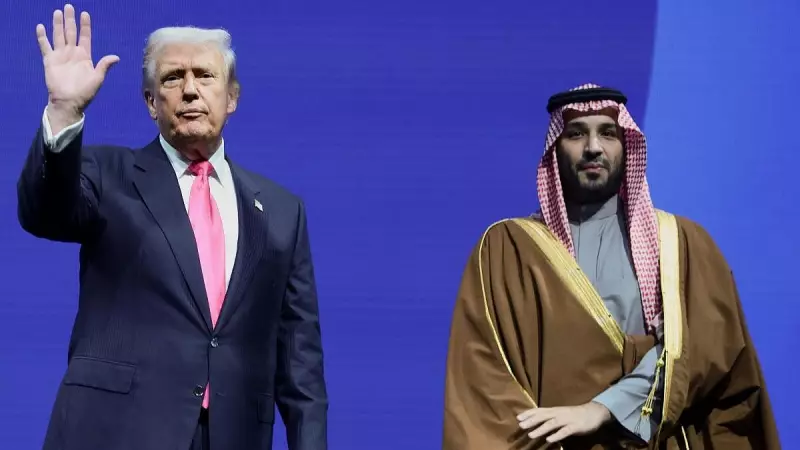
Former President Donald Trump's recent defense of Saudi Crown Prince Mohammed bin Salman has exposed a fundamental transformation in America's approach to human rights on the global stage, according to political analysts and diplomatic observers.
Contradicting Intelligence Findings
Trump's remarks directly challenged established US intelligence assessments regarding the Saudi leadership's involvement in controversial matters. This public positioning throws into sharp contrast the traditional American stance of prioritizing human rights concerns in international relations.
The former president's comments, made in November 2025, represent more than just a difference of opinion—they highlight a systematic departure from decades of bipartisan foreign policy consensus. For generations, American administrations had maintained human rights as a cornerstone of their diplomatic engagements worldwide.

The Broader Policy Transformation
What makes this development particularly significant is that it doesn't appear to be an isolated incident. Trump's administration had been gradually shifting away from traditional human rights advocacy throughout its tenure, though the Saudi case presents one of the most visible examples.
This policy evolution raises important questions about America's future role as a global human rights champion. The strategic relationship with Saudi Arabia, long complicated by human rights concerns, now appears to be entering a new phase where traditional diplomatic pressures may take a backseat to other considerations.
Global Implications and Reactions
The implications of this shift extend far beyond US-Saudi relations. International observers are watching closely to see how this change might affect American foreign policy toward other nations with questionable human rights records.
As documented by Reuters in their November 20, 2025 report, the Trump administration's position has created ripples across diplomatic circles. The traditional expectation that the United States would consistently advocate for human rights protections appears to be undergoing significant revision.
This development comes at a time when global human rights face numerous challenges, making America's changing position particularly consequential for international norms and standards.