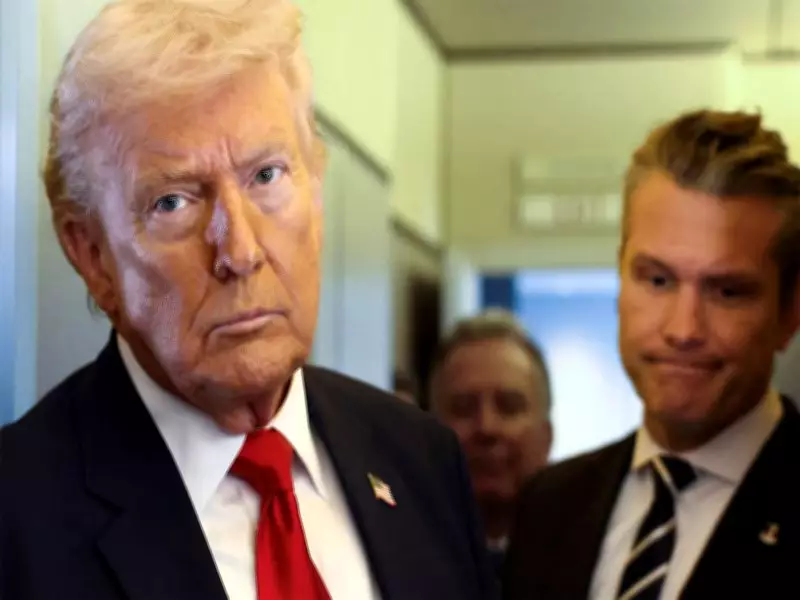
Trump Calls on Seven Nations to Deploy Warships for Strait of Hormuz Protection
US President Donald Trump has announced a request for approximately seven nations to deploy warships to assist in maintaining transit routes through the Strait of Hormuz. This initiative comes as the ongoing conflict with Iran continues to impact this critical maritime corridor, which serves as a vital artery for global energy.
International Coalition for Maritime Security
In remarks made on Sunday, President Trump outlined his intention to establish an international coalition to provide escorts for vessels navigating the strait. He emphasized that the selected nations are those with a high level of dependency on Middle Eastern oil supplies, stating, "We're talking to countries about policing the straits because they are the ones -- you know, we don't get oil, very little, 1%. China, as an example, gets about 90% of its oil from the Hormuz Strait. It'd be nice to have other countries policing with us. And we'll help, and we'll work with them."
Trump took a firm stance on the responsibility of these international partners, asserting, "I'm demanding that these countries come in and protect their own territory because it is their own territory." Despite escalating global oil prices, no country has yet provided a definitive commitment to the mission.

Military Assessment and Global Context
Drawing parallels to US involvement in other global theatres, Trump noted, "I think we're getting a good response. We're always there for NATO. We're helping them with Ukraine. It doesn't affect us, but we've helped them. It'd be interesting to see which country wouldn't help us with a very small endeavour, which is just keeping the Strait open."
Assessing the military situation, the US President suggested that Tehran's capabilities have been severely diminished, though he acknowledged the potential for limited retaliation. "As far as I'm concerned, we've essentially defeated Iran. I guess they can have a little bit of fight back. But not much. We have taken out their air forces, air defence. They have no air defence whatsoever. We have taken out their leadership. Militarily, it's been amazing," he said.
Trump further claimed that the US military has effectively crippled Iran's industrial base for weaponry, remarking, "My comparison is small because Iran has very little firepower left. Their missiles are down to a low number. They're shooting very few of them because we've decimated their manufacturing capability. Likewise, the drones are way down. They're down to about 20% of what they had."
Iran's Response and Economic Implications
On the other side, Iran's Foreign Minister Abbas Araghchi informed CBS that several nations have approached Tehran to ensure safe passage for their ships. He maintained that such permissions are strictly under the purview of the Iranian military, noting that a group of vessels from "different countries" had been allowed to pass.
Araghchi dismissed the possibility of diplomatic engagement with Washington to conclude the hostilities, asserting that Israel and the US initiated the conflict with synchronised strikes on February 28. He also stated that Tehran has "no plan to recover" its enriched uranium stocks, which were liquidated during US and Israeli operations in the previous year.
The volatility in the Strait of Hormuz has sent shockwaves through the energy sector, with oil prices climbing past USD 100 per barrel since the onset of US military actions two weeks ago. In the United States, petrol prices have surged by over 70 cents per gallon.
Tehran has reportedly attempted to obstruct the passage using small boats and sea mines. In response, US administration officials have affirmed that the US Navy will continue to offer protection to commercial ships in the region.
Domestic Political Pressures
The economic implications are weighing heavily on domestic politics as well. Republicans in Congress have called for swift White House intervention to avoid an economic crisis at the start of an election year. However, President Trump and certain party members have resisted pressure for a hasty conclusion to the war, seeking instead to prevent long-term disruptions to the global supply chain.

This development underscores the complex interplay between international diplomacy, military strategy, and economic stability in the ongoing US-Iran conflict, with the Strait of Hormuz remaining a focal point of global attention.