

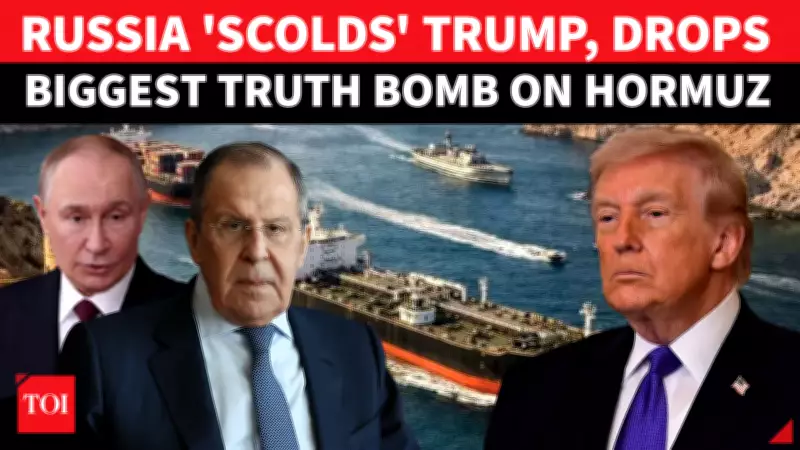
Lavrov Delivers Blunt Message to Trump on Strait of Hormuz Crisis
In a sharply worded statement, Russian Foreign Minister Sergey Lavrov has issued what observers are calling a "humiliating warning" to former US President Donald Trump regarding demands that Iran reopen the vital Strait of Hormuz. This diplomatic rebuke comes amidst heightened regional tensions following reports that Iranian forces have destroyed multiple US fighter jets, escalating an already volatile situation in the Middle East.
Moscow Calls for Immediate Ceasefire and Diplomatic Engagement
Speaking after high-level talks with Egypt's foreign minister in Moscow, Lavrov emphasized the urgent need for de-escalation. He explicitly urged Washington to halt its military strikes against Iranian targets as a precondition for any discussion about reopening the strategic waterway. The Russian diplomat stressed that a return to diplomacy is essential to protect Gulf security and prevent further conflict.
"The current approach of making demands while continuing attacks is counterproductive and dangerous," Lavrov stated during the press conference. "We need an immediate ceasefire, followed by genuine diplomatic negotiations that address the security concerns of all regional actors."

Coordinated UN Action Proposed as Tensions Spike
Lavrov revealed that Moscow and Cairo are pushing for coordinated action at the United Nations Security Council to address the escalating crisis. This initiative aims to establish a framework for conflict resolution while ensuring the free flow of commerce through the Strait of Hormuz, through which approximately one-fifth of the world's oil passes.
The Russian foreign minister's comments come as multiple reports indicate Iranian forces have successfully targeted and destroyed US E-3 Sentry AWACS aircraft and other military assets in recent engagements. These developments have raised concerns about the potential for broader regional conflict involving multiple state and non-state actors.
Broader Regional Implications and Security Concerns
The Strait of Hormuz has long been a flashpoint in US-Iran relations, with Tehran periodically threatening to close the waterway in response to American sanctions and military pressure. Lavrov's intervention represents a significant diplomatic maneuver by Russia to position itself as a mediator in the conflict while challenging US policy in the region.
Analysts note that Lavrov's statement aligns with Moscow's broader strategic interests in the Middle East, where Russia maintains close ties with Iran while seeking to expand its influence at the expense of American dominance. The coordinated approach with Egypt suggests a growing alignment among regional powers concerned about the destabilizing effects of continued US-Iran hostilities.
As tensions continue to spike across the Middle East, with reports of Houthi strikes in southern Israel and heightened alert levels in strategic locations like Beersheba, Lavrov's warning to Trump underscores the precarious nature of the current situation. The call for UN action represents an attempt to internationalize the crisis management process and prevent further escalation that could have global economic and security consequences.






