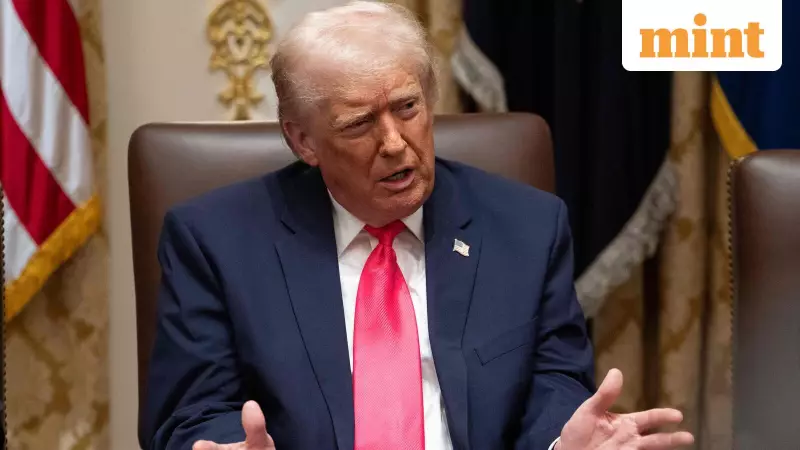
In a significant escalation of its immigration policy, the Trump administration has dramatically widened its controversial travel ban, adding five new countries to a list facing near-total restrictions and imposing partial bans on 15 others. This move formalises President Donald Trump's pledge for a sweeping crackdown following a violent incident in the capital.
The Expanded List of Restricted Nations
The White House announced that citizens from Burkina Faso, Mali, Niger, South Sudan, and Syria will now be subject to a full ban, effectively blocking almost all immigration and entry into the United States. Notably, Palestinians whose travel documents are issued by the Palestinian Authority are also included in this comprehensive prohibition.
Furthermore, two nations previously under partial restrictions—Laos and Sierra Leone—will now face full bans. In a broader sweep, the administration has instituted new partial bans on 15 additional countries. This list includes: Angola, Antigua and Barbuda, Benin, Ivory Coast, Dominica, Gabon, The Gambia, Malawi, Mauritania, Nigeria, Senegal, Tanzania, Tonga, Zambia, and Zimbabwe.

Under these partial bans, citizens from these countries will generally be unable to apply for tourist or student visas for the duration of the policy's effect.
Catalyst and Rationale Behind the Crackdown
The policy expansion is part of a broader crackdown on legal immigration initiated after a 29-year-old Afghan national, Rahmanullah Lakanwal, was accused of shooting two National Guard members in Washington in November 2025. Following the attack, President Trump took to his Truth Social platform, vowing to "permanently pause migration from all Third World Countries" to allow the U.S. system to recover.
This statement appears to have directly informed the latest action. Homeland Security Secretary Kristi Noem publicly supported the aggressive stance, posting on X that she had met with Trump and recommended a "full travel ban on every damn country that’s been flooding our nation with killers, leeches, and entitlement junkies."
Unprecedented Policy Shifts and Domestic Impact
This announcement marks the latest step in what is seen as an unprecedented effort by the Trump administration to restrict legal immigration channels. Notably, the crackdown now extends beyond foreign nationals abroad to impact individuals already within the United States.
The administration has developed a new policy tool designed to bar citizens from banned countries from obtaining permanent residency, even if they currently reside in the U.S. Under this rule, green card applications from these nationals would likely be denied, as their country of origin would be treated as a "significantly negative factor" in the adjudication process.
Other drastic measures already underway include pausing all immigration request processing for Afghans—including those with pending green card or citizenship applications—and halting asylum decisions indefinitely. In a move with potentially vast consequences, officials have announced a plan to reopen hundreds of thousands of refugee and asylum cases approved under the preceding Biden administration, which could strip some individuals of their permanent legal status.
These countries now join a list that already includes nations like Afghanistan, Iran, and Haiti under full or partial bans, reflecting a sustained and hardening approach to immigration from specific regions of the world.