

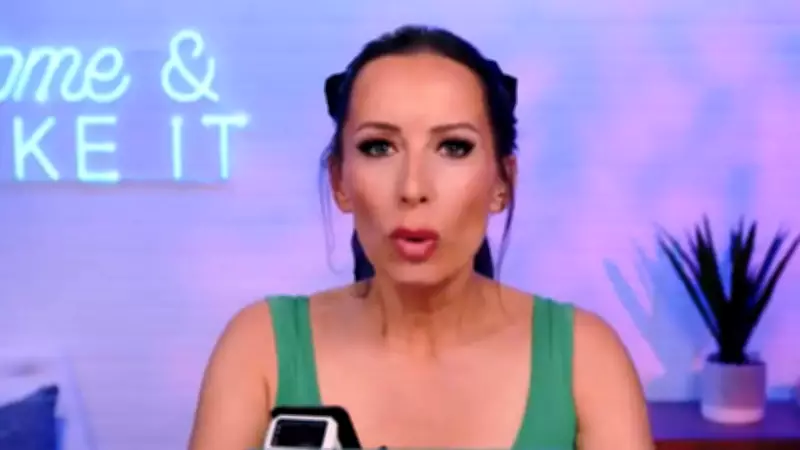
Texas Media Personality Faces Intense Online Criticism Over Park Comments
BlazeTV reporter and Texas journalist Sara Gonzales is currently confronting significant backlash across social media platforms following controversial remarks about children playing in a public park. The media personality, who initially gained attention for her investigations into H-1B visa programs, recently shared a personal experience on X (formerly Twitter) that has ignited a heated national conversation about immigration, language, and community dynamics.
The Controversial Social Media Post
Gonzales detailed taking her five-year-old son to a park in Plano, Texas, where she observed being surrounded by families speaking multiple foreign languages. She expressed concern that this linguistic diversity made it "more difficult" for her child to form friendships with other children. The journalist concluded her post with a poignant statement: "This is my hometown. It’s unrecognisable. I want my country back."
These comments quickly circulated across digital platforms, attracting thousands of responses from users with varying perspectives on immigration, cultural integration, and childhood socialization.

Widespread Criticism and Counterarguments
The majority of initial reactions strongly condemned Gonzales' viewpoint, with many accusing her of projecting adult prejudices onto innocent children. One Indian-origin respondent challenged her assumptions directly: "Lady, no five-year-old born in this country speaks their parents’ foreign language like that. I have three children under five who are top students and speak English even at home."
Another critic emphasized the natural inclusivity of children: "Your five-year-old will readily make friends with those speaking English and other languages. Why? Because he does not carry the racism that you do. Racism is taught. Loving others is innate."
Several responses expressed disappointment that Gonzales appeared to be extending what they characterized as anti-minority sentiment to young children, with one comment reading: "Now you are coming for kids. Ridiculous."
Support Amid Rising Anti-Indian Sentiment
Despite the overwhelming criticism, Gonzales' remarks resonated with some users who share concerns about changing demographics and immigration policies. One supporter advocated for making certain groups "uncomfortable and unwelcome," arguing that Americans have been "prisoners of our own standards and norms" regarding immigration.
Another comment specifically targeted H-1B visa programs: "End H1B! We're in one of the worst job markets in years. Send the Indians home. We don't need them. End temporary visas and give jobs to Americans."
This support emerges against a backdrop of increasing anti-Indian rhetoric in the United States, particularly in regions with growing Indian-American populations.
Gonzales' Background and Recent Activism
Sara Gonzales has developed a reputation for her anti-H-1B visa activism throughout Texas and surrounding areas. She recently gained viral attention for accusing Indian-origin businessman Naveen Tummala of operating an H-1B-H4 visa scam, alleging discrepancies between his visa sponsorship and business ownership claims.
Her investigative approach to immigration issues has positioned her as a controversial figure in ongoing debates about visa programs, employment, and cultural integration.
Demographic Context and Research Findings
The Plano and Frisco areas of Texas have experienced substantial growth in their Indian-American populations over the past decade. According to a May 2025 Pew Research Center study, Texas is home to approximately 570,000 Indian residents, representing one of the largest concentrations in the nation.
However, this demographic shift has been accompanied by increasing negative sentiment toward the community. A 2026 survey conducted by the Carnegie Endowment for International Peace revealed troubling statistics: since early 2025, one in four Indian-Americans reported being subjected to racial slurs, with many describing the United States as the "epicenter of anti-Indian digital racism."
This hostility manifests across multiple forums, from local city council meetings to widespread online discussions, where Indian-American culture and community presence face regular criticism and opposition.

Broader Implications and Ongoing Dialogue
The controversy surrounding Gonzales' comments highlights deeper tensions regarding immigration, cultural preservation, and community evolution in rapidly changing American suburbs. While some view linguistic diversity as an enrichment of community life, others perceive it as a threat to traditional social structures and national identity.
This incident underscores how personal experiences in everyday settings like public parks can become flashpoints for national debates about belonging, integration, and the future of multicultural societies. The polarized responses reflect broader societal divisions that continue to shape political discourse and community relations across Texas and beyond.





