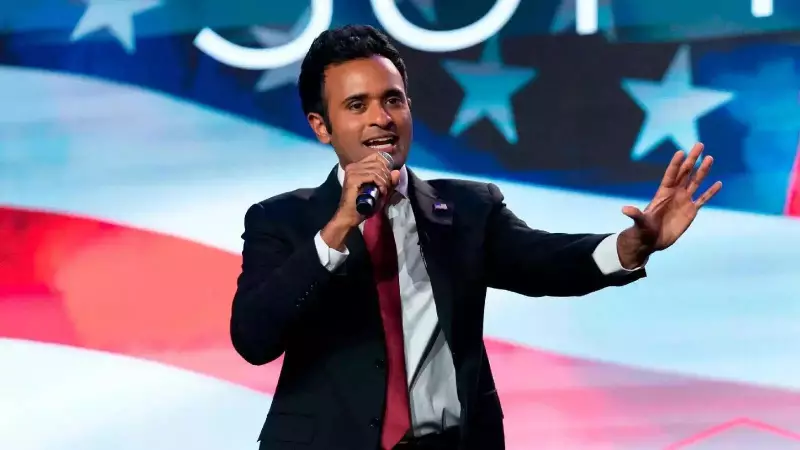
Vivek Ramaswamy, the former biotech executive turned Republican candidate for Ohio governor, has passionately defended the concept of the American Dream as a unique national ideal, setting the stage for a contentious political race in 2026. The Indian-origin politician, who has secured an endorsement from former US President Donald Trump, made his comments to supporters, positioning himself against Democratic candidate Amy Acton.
The "American Dream" as a Singular Ideal
In his address, Ramaswamy emphatically contrasted the American Dream with aspirations in other nations. He argued that the dream is uniquely American, stating there is no equivalent Canadian, British, or Chinese Dream. He directly linked this concept to "American exceptionalism," suggesting it is the foundational element that makes the nation distinct and successful. This rhetoric forms a core part of his campaign message as he seeks to connect with the Republican base in Ohio.
Support and Backlash in the Political Arena
Despite his strong positioning within the party and the high-profile backing from Donald Trump, Ramaswamy's campaign has been marred by significant hostility from certain factions. He has faced xenophobic and racist attacks from segments of the conservative MAGA movement who espouse white nationalist views. Critics on social media have gone as far as calling for his deportation, questioning his right to define the American experience, and making derogatory comments about his heritage.

This vitriol was evident even in personal moments, such as when Ramaswamy shared a Halloween photo with his young children on social media platform X, which attracted a stream of hateful and sly attacks. The backlash highlights the challenges he faces as a non-white candidate in a party grappling with its identity.
Public and Social Media Reaction
The public response to Ramaswamy's American Dream comments has been sharply divided. While his supporters applaud his vision, a vocal segment on social media expresses deep skepticism and criticism:
- Many users cynically compared the dream to a fantasy, suggesting it is unattainable for younger generations burdened by long-term mortgages and economic hardship.
- Others attacked Ramaswamy personally, using his Indian origin to question his legitimacy and making explicitly racist demands for immigration moratoriums and his deportation.
- Some countered his premise, arguing that aspirations for a good life are not exclusive to the United States and shouldn't be framed as a singular "dream."
This polarized reaction underscores the intense debate surrounding national identity, immigration, and economic opportunity in contemporary American politics. As the 2026 Ohio governor's race heats up, Ramaswamy's candidacy will continue to test the Republican Party's dynamics and the enduring power—and contested meaning—of the American Dream itself.