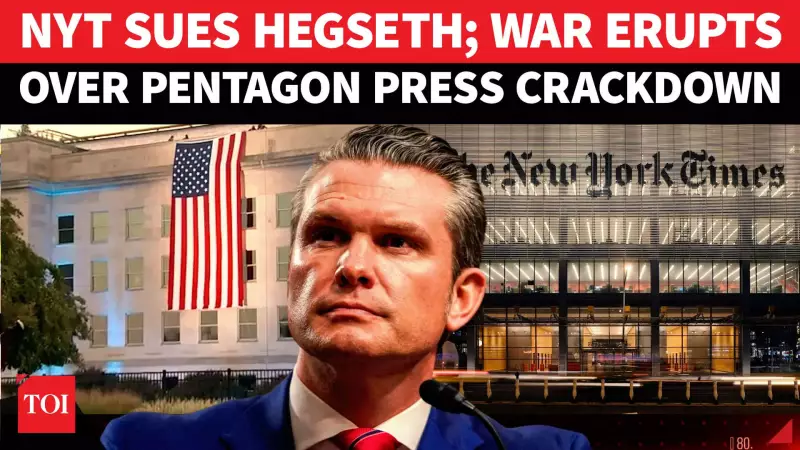
In a significant escalation of tensions between the U.S. government and the press, The New York Times has filed a lawsuit against the U.S. Department of War. The legal action, initiated on December 4, 2025, challenges a controversial new press-access policy implemented by the Pentagon that has sparked a fierce debate over First Amendment protections.
The Core of the Controversy: A Restrictive Pledge
The lawsuit centers on a newly established credentialing system for journalists seeking access to Pentagon briefings. This system mandates that reporters sign a restrictive newsgathering pledge, which critics argue grants government officials excessive power to control and potentially silence reporting that is unfavorable to the administration.
The policy has already led to tangible consequences. Several major news outlets found themselves locked out of briefings after they refused to agree to the terms of the pledge. Conversely, media organizations perceived as supportive of the current administration were granted access, creating a clear divide.

A Briefing That Intensified the Conflict
The situation reached a new level of contention following a recent Pentagon briefing. During this event, a spokesperson for the Department publicly labeled the excluded news organizations as "propagandists." This remark amplified concerns that the policy is not merely an administrative rule but a tool for discrediting and marginalizing critical journalism.
The New York Times, in its legal filing, argues that these actions collectively represent a direct threat to the core principles of a free press enshrined in the First Amendment of the U.S. Constitution. The lawsuit contends that the government is effectively picking winners and losers in the media landscape based on perceived loyalty.
Legal Battle and Broader Implications
With the case now formally lodged in a federal court, a wider legal and media battle is unfolding. The outcome could set a crucial precedent for the boundaries of government interaction with the press during times of political polarization.
Observers note that this clash highlights a deepening rift between the state and institutional journalism. The lawsuit by a publication of The New York Times's stature signals a readiness to confront what it sees as systemic attempts to undermine press freedom through bureaucratic measures.
The Pentagon, now legally challenged, must defend its policy in court. This proceeding will be closely watched by media houses globally, as it touches upon universal questions about access, transparency, and the independence of the fourth estate from government overreach.