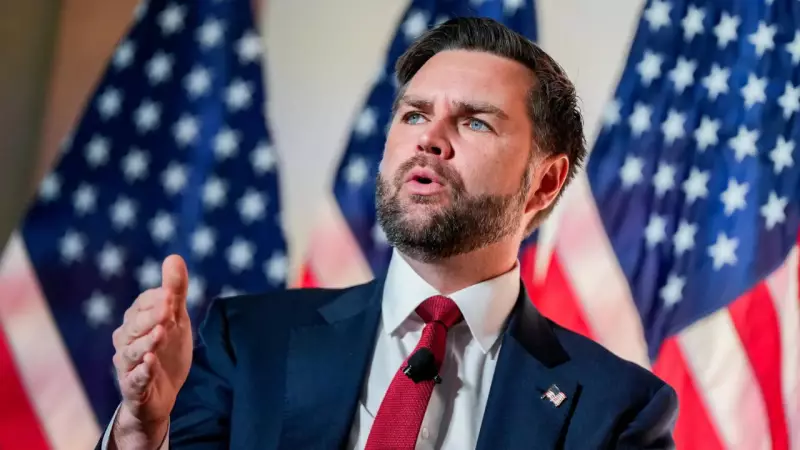
In a sharp transatlantic rebuke, United States Vice President JD Vance has publicly criticised the European Union over its anticipated move to impose a substantial financial penalty on the social media platform X, formerly known as Twitter. Vance accused the EU bloc of penalising the company for refusing to engage in what he termed "censorship."
Vance's Defence of Free Speech and American Firms
Taking to the very platform in question on Thursday, Vance launched a direct appeal to the EU. He urged the governing body not to target American companies over what he described as "garbage" issues and to instead champion the principle of free speech. "Rumors swirling that the EU commission will fine X hundreds of millions of dollars for not engaging in censorship," Vance wrote in his post on X. He further stated, "The EU should be supporting free speech, not attacking American companies over garbage." His comments highlight a growing ideological clash between US political figures and European regulators on the boundaries of online governance.
The Grounds for the EU's First-Ever DSA Fine
Contrary to Vance's characterisation, the expected fine is not related to content takedowns or censorship. According to reports from The Capitol Forum, the European Commission is preparing to issue its inaugural sanction under the landmark Digital Services Act (DSA) in the coming days, potentially as early as Friday. Sources indicate the penalty focuses on alleged breaches concerning advertisement transparency, data access for researchers, and deceptive design practices.

This action stems from preliminary charges levelled by the Commission last year. Regulators accused X of misleading users through its blue checkmark verification system, arguing that the badge did not enable users to make properly informed decisions about the authenticity of accounts they interact with. Two individuals with direct knowledge of the internal discussions confirmed to The Capitol Forum that the final timing and magnitude of the fine were still under debate within the Commission. However, the penalty is anticipated to be modest in size, despite marking a significant enforcement milestone for the DSA.
A Watershed Moment for Digital Regulation
The impending fine represents a pivotal first step in the EU's enforcement of the DSA, a comprehensive law that substantially expands the legal obligations for major online platforms operating within its 27-nation bloc. This move signals the EU's firm intent to hold tech giants accountable for systemic issues related to user transparency and data practices, moving beyond contentious debates on individual content moderation. While Vance frames the issue as one of free speech versus censorship, the EU's focus appears firmly on establishing clear rules for advertising and interface design, setting a precedent for how global digital markets will be regulated.