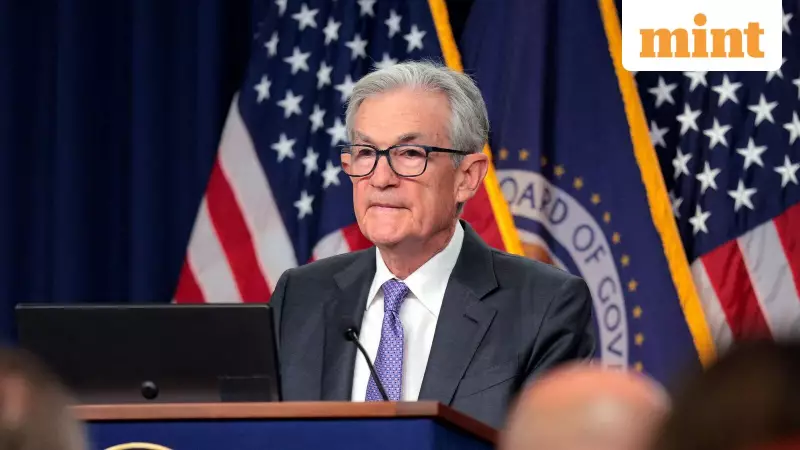
The United States Federal Reserve is widely expected to cut interest rates further in 2025, but a critical financial reality persists: these actions are unlikely to bring down long-term bond yields significantly. This disconnect poses a major challenge for policymakers, the housing market, and the nation's debt burden.
The Limits of Fed Power on Long-Term Rates
While the Fed wields considerable influence over short-term interest rates, its control diminishes as bond durations lengthen. The central bank's authority is strongest on bonds with maturities of less than five years. For longer-term securities, like the crucial 10-year US Treasury, market forces take the driver's seat. These forces include expectations for future inflation, the risk premium investors demand, and the sheer volume of government debt being issued.
The situation is poised to continue under new leadership. Current Chair Jay Powell may have overseen his final rate cut, with his likely successor, Kevin Hassett, expected to continue easing monetary policy in 2025. This aligns with the desires of President Donald Trump, who seeks lower rates to boost markets and reduce the cost of servicing the national debt. However, even a hawkish Fed chair committed to fighting inflation, like a modern-day Paul Volcker, would struggle to force the 10-year yield down.

Market Forces Keeping Yields Elevated
Several powerful factors are applying upward pressure on long-term yields, independent of the Fed's short-term rate decisions. First, inflation concerns linger. With inflation holding around 3% and the full impact of US tariffs yet to be felt, markets are skeptical about a swift return to the 2% target.
Second, the US government's fiscal trajectory is a key worry. There is little commitment in Congress to reducing the federal debt, meaning a continued high supply of new Treasury bonds. This increased supply risks depressing bond prices, making them riskier to hold. Investors, in turn, demand a higher yield as compensation.
Finally, there is a historical tendency for bond yields to revert to a long-term average. This average is influenced by fundamental, slow-changing factors like the productivity of capital and how society values future consumption versus present consumption. The ultra-low yield environment of the 2010s may have been an anomaly, not a new normal.
Consequences and the Danger of Intervention
The stubbornly high 10-year yield has serious consequences. It translates directly to higher mortgage rates, cooling the housing market. It makes servicing the national debt more expensive for the US government. Most alarmingly, it raises the risk of a 'credit event' as companies struggle to refinance their existing debt at affordable rates, potentially triggering a broader financial crisis.
Frustration with this dynamic may push the government towards more aggressive tactics, such as renewed large-scale bond purchases (quantitative easing) or regulatory measures forcing banks to buy debt—a strategy known as financial repression. However, economists warn that such interventions distort the pricing of risk. Messing with these fundamental market signals often creates more severe problems than it solves, potentially leading to asset bubbles or a loss of market confidence.
In essence, the Fed finds itself in a bind. It can manage short-term economic risks by cutting rates, but the long-term cost of capital is being dictated by deeper fiscal and inflationary trends that are largely beyond its control. The year 2025 will test whether policymakers accept this reality or embark on risky interventions with unpredictable outcomes.