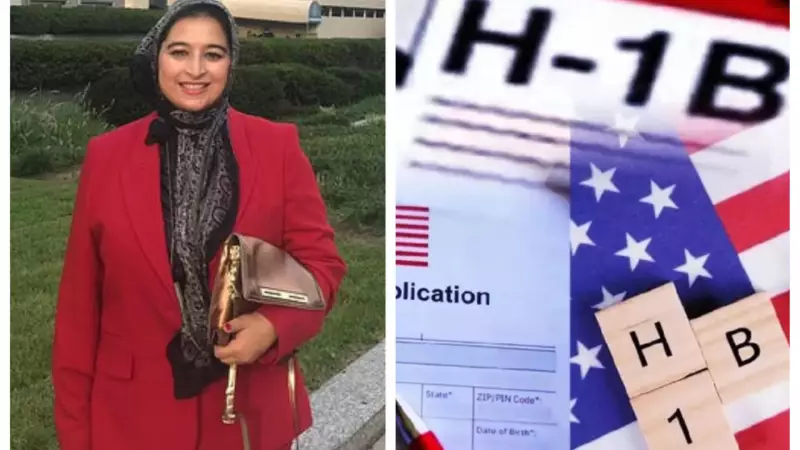
A former American diplomat of Indian origin, who witnessed the inner workings of the US visa system in India, has issued a stark warning and called for an immediate halt to the H-1B visa program. Mahvash Siddiqui, who served at the US Consulate in Chennai, has described a vast ecosystem of fraud that she says undermines American workers and exploits the immigration system.
Chennai: The Epicenter of H-1B Fraud
In detailed writings for the Center for Immigration Studies and a recent podcast, Siddiqui revealed alarming insights from her posting between 2005 and 2007. She labelled the Chennai consulate as the "H-1B visa fraud capital of the world." During her tenure, the office adjudicated approximately 100,000 H-1B applications annually. She notes that demand has now skyrocketed to over 400,000 applications per year, creating immense pressure and opportunity for malfeasance.
Siddiqui described a well-organized industry in Hyderabad's Ameerpet area dedicated to forging documents for H-1B applicants. This includes:

- Fake university degrees and transcripts
- Forged bank statements to show financial stability
- Counterfeit marriage and birth certificates
She stated that many applicants claiming computer science degrees lacked basic programming knowledge, a fact often exposed by simple coding tests during interviews. This widespread fraud, she argues, is facilitated by a culture of bribery, known locally as "rishwat," and a troubling normalization of dishonest practices.
Insular Networks and the "Halo Effect"
The problems, according to Siddiqui, extend beyond India's borders into corporate America. She highlighted a pervasive "halo effect" that unfairly favored Indian applicants during the visa process. Corrupt human resources officials in both India and the United States were complicit, providing fake employment letters to help underqualified candidates bypass scrutiny.
Once in the U.S., the issue perpetuates. Siddiqui wrote that some Indian managers create insular hiring networks that deliberately exclude American workers. These networks protect unqualified hires and foster an environment of "honor among thieves" that actively discourages whistleblowing. The consequence, she argues, is dire for American graduates.
"American IT graduates — trained through rigorous programs — were left unemployed or were forced to train their H-1B replacements for lower pay," Siddiqui wrote. She accused Indian lobbyists and Silicon Valley of running a disinformation campaign that portrays American workers as less capable, misleading a often naive U.S. Congress.
A Call for Overhaul and Audit
Mahvash Siddiqui contends that the H-1B program, designed for skilled global talent, has become a de facto immigration shortcut dominated by one country. To restore integrity and purpose, she has proposed a series of concrete reforms:
- Pause new H-1B issuances pending a complete, top-to-bottom audit of the entire program.
- Strengthen vetting procedures to rigorously verify academic credentials, actual skills, and employment history.
- Prioritize the hiring of qualified U.S. STEM graduates in sectors where domestic talent is available.
- Ban nepotistic and chain-hiring practices that systemically exclude American applicants.
- Enforce strict penalties for fraud, noting that recent prosecutions prove deterrence is possible.
- Dramatically expand site inspections of companies using H-1B workers to match the scale and risk level of the program.
Her testimony sheds light on the intense pressures within the visa system and raises serious questions about the management and oversight of a program critical to both the U.S. tech industry and global talent mobility. The call for a pause is likely to fuel the ongoing debate around H-1B reform and the protection of domestic labor markets.