

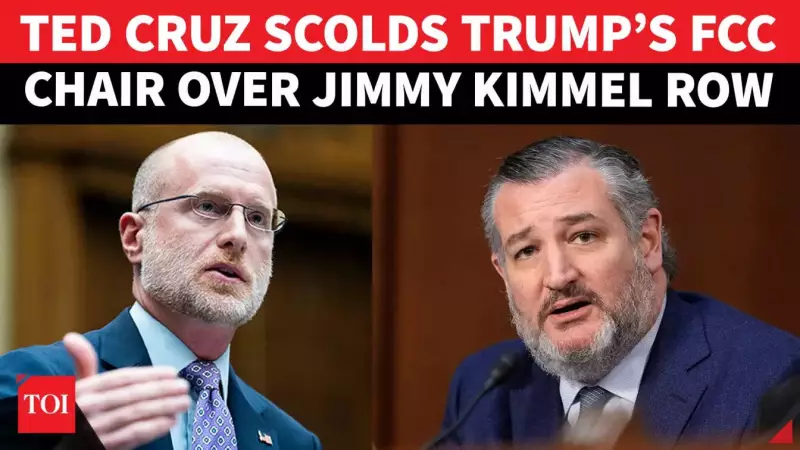
In a fiery exchange that highlighted deep concerns over government overreach, US Senator Ted Cruz confronted Federal Communications Commission (FCC) Chairman Brendan Carr during a Senate oversight hearing. The confrontation, which took place on December 18, 2025, centered on the temporary suspension of the popular late-night show Jimmy Kimmel Live! following controversial remarks made by the host.
A Heated Exchange Over Free Speech
The controversy stems from comments made by Jimmy Kimmel regarding the suspect charged in the murder of Charlie Kirk, the founder of the conservative group Turning Point USA. In response to the ensuing uproar, the show faced a temporary suspension, an action that drew the ire of Senator Cruz. During the hearing, Cruz forcefully argued that government pressure on broadcasters poses a direct threat to the First Amendment and risks setting a dangerous precedent for unconstitutional censorship.
Cruz characterized the situation as "dangerous as hell," emphasizing that the weaponization of regulatory power against speech, even if controversial, undermines a core American principle. His pointed questioning aimed to hold the FCC accountable for its role, perceived or real, in influencing the broadcaster's decision.

FCC Chairman's Defense and Political Redirection
FCC Chairman Brendan Carr, while acknowledging the senator's concerns, offered a nuanced defense. He agreed that the FCC's public interest standard has been weaponized for political purposes in the past. However, Carr redirected the criticism, pointing the finger primarily at Democratic lawmakers and previous administrations for such practices.
Carr's rebuttal shifted the focus to what he described as a historical pattern of politicization rather than accepting blame for the current incident. This deflection ensured the exchange, while heated, moved on without a deeper, case-specific scrutiny of the FCC's actions concerning the Kimmel show. The hearing proceeded to other topics, leaving the fundamental clash over speech and regulatory power unresolved.
Broader Implications for Media and Regulation
This confrontation is more than a political spat; it touches on the enduring tension between content regulation and free speech rights in the broadcast era. The incident raises critical questions about the limits of the FCC's authority and the potential chilling effect on comedians and commentators who tackle sensitive political subjects.
For media observers and free speech advocates, the Cruz-Carr hearing serves as a stark reminder of how quickly regulatory frameworks can become tools in cultural and political battles. The outcome, or lack thereof, from this hearing suggests these debates will continue to simmer, especially in a polarized climate where the boundaries of acceptable speech are constantly contested.






