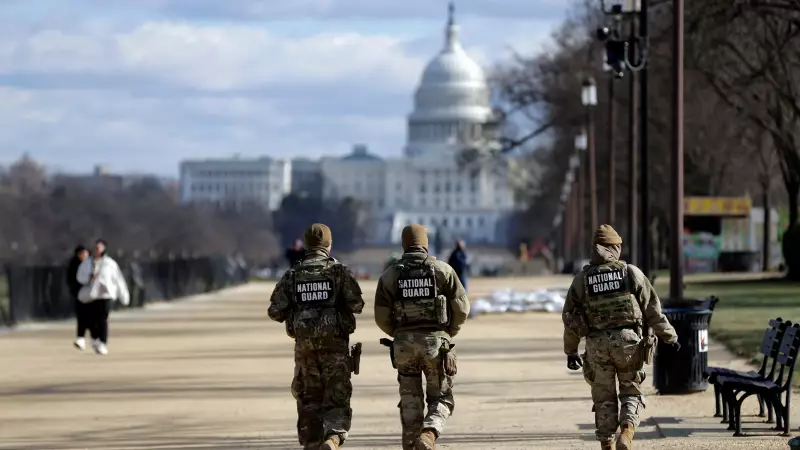
A federal appeals court in the United States has delivered a significant ruling, permitting the continued deployment of National Guard troops in Washington D.C. The decision comes amidst heightened security preparations for the upcoming presidential inauguration.
Court Rejects Legal Challenge to Troop Presence
The U.S. Court of Appeals for the District of Columbia Circuit rejected an emergency bid to halt the deployment of National Guard members in the nation's capital. The legal challenge was filed by the group, Black Lives Matter D.C., and individual plaintiffs. They argued that the large-scale military presence, authorized in the wake of the January 6th Capitol riot, was unconstitutional and created a climate of intimidation.
However, a three-judge panel on the appeals court disagreed. The judges stated that the plaintiffs had not demonstrated they were likely to succeed on the merits of their case. Furthermore, the court found that the plaintiffs did not show they would suffer "irreparable injury" if the deployment continued during the critical days leading up to Inauguration Day.

Security Concerns and the Road to Inauguration
The decision underscores the extraordinary security measures being taken for the inauguration of President-elect Joe Biden. Following the violent insurrection at the U.S. Capitol, authorities have mobilized an unprecedented security apparatus. Thousands of National Guard troops from various states have been activated and are currently stationed in Washington D.C.
Their mission is to support law enforcement agencies in securing the Capitol, the National Mall, and other key areas. The goal is to prevent any repeat of the chaos and violence that disrupted the congressional certification of the Electoral College results. The FBI has also warned of potential armed protests and threats in all 50 state capitals, amplifying the perceived need for a robust federal response.
The deployment was authorized under the outgoing Trump administration. The legal challenge contended that this authorization violated the Posse Comitatus Act, a law that generally restricts the use of federal military personnel for domestic law enforcement. The plaintiffs' lawyers argued that the city was effectively under military occupation.
Implications and the Path Forward
The court's ruling is a clear victory for federal and district authorities who have argued that the troop presence is a necessary, temporary measure to ensure a peaceful transition of power. It allows the security plan to proceed without judicial interference at this late stage.
Legal experts note that while the emergency request was denied, the underlying lawsuit can still proceed. The plaintiffs may continue to argue their case in lower courts, but any future ruling would likely come after the inauguration and the conclusion of the current security mission. The focus now remains squarely on the event itself, with the nation's eyes on whether the ceremonies can be conducted safely and without incident.
This situation highlights the delicate balance between civil liberties and security in a democracy facing internal threats. The massive show of force is intended to deter violence, but it also presents a jarring visual of a militarized capital, sparking debates about the long-term implications for public gatherings and protest in the United States.