

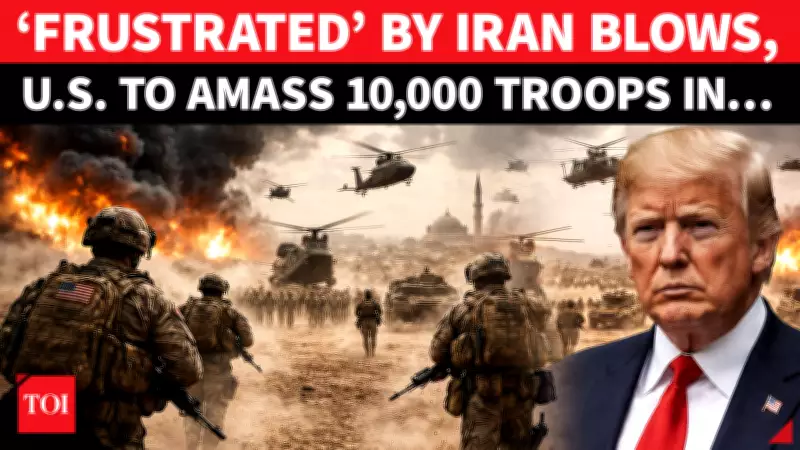
Pentagon Weighs Major Troop Surge in Middle East Amid Iran Standoff
The United States is actively considering a significant military escalation in the Middle East, with the Pentagon preparing options to deploy up to 10,000 additional troops to the region. This potential surge comes as tensions with Iran remain dangerously high, with both diplomatic and military avenues being pursued simultaneously.
Military Preparations and Strategic Options
According to reports, the Pentagon is developing comprehensive plans that include not only the troop deployment but also preparations for a possible ground operation and a large-scale bombing campaign. Reinforcements, advanced fighter jets, and specialized airborne units are already being mobilized and positioned, underscoring the seriousness of the situation.
The strategic calculus involves bolstering US presence to counter Iranian threats, particularly around critical chokepoints like the Strait of Hormuz. Military analysts note that such a deployment would represent a substantial increase in combat readiness, signaling Washington's willingness to back diplomacy with tangible force.

Diplomatic Window Extended Amid Uncertainty
In a parallel development, President Donald Trump has extended a temporary pause on striking Iran's energy infrastructure by an additional 10 days. This extension is widely interpreted as a signal that negotiations between the two nations are ongoing, albeit under immense pressure.
However, the situation remains fraught with uncertainty. Both the United States and Iran are carefully weighing the risks of military escalation against the potential for a diplomatic breakthrough. The rapidly evolving conflict dynamics mean that the window for peaceful resolution is narrow and subject to sudden shifts.
Regional and Global Implications
The potential deployment of 10,000 US troops would have profound implications for regional stability. It could alter the balance of power in the Middle East, affect global oil markets due to the strategic importance of the Strait of Hormuz, and draw reactions from other global powers with interests in the area.
As preparations continue, the international community watches closely, aware that any miscalculation could lead to a broader conflict. The coming days will be critical in determining whether diplomacy can prevail or if military action becomes inevitable.






