

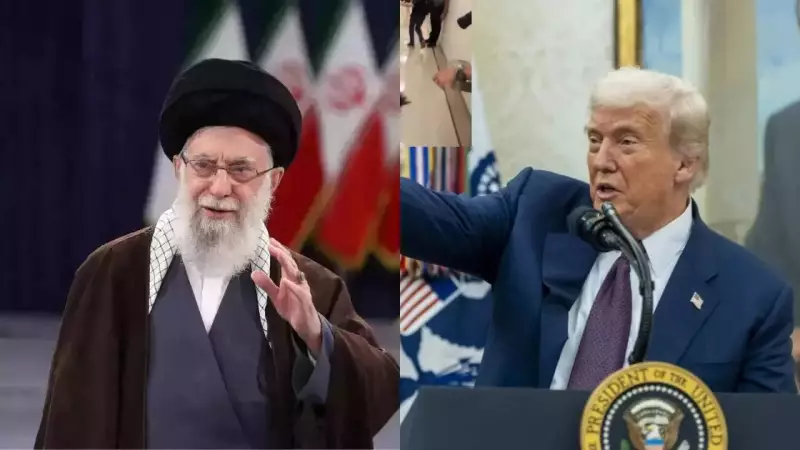
Iran's Supreme Leader Ayatollah Ali Khamenei took to his official X account on Friday, posting a series of defiant messages that squarely blamed the United States and its former President Donald Trump for inciting violent unrest within the country. This digital defiance unfolded against the backdrop of a severe, sweeping internet blackout that left much of Iran disconnected from the world.
Defiant Accusations from the Top
In his posts, Khamenei launched a direct attack on the United States, accusing it and President Donald Trump of being the primary instigators of the ongoing protests. He claimed protesters were destroying their own nation's infrastructure and vowed that the Islamic Republic would not retreat. "All should know that the Islamic Republic of Iran, established with the sacrifice of several hundred thousand honourable people, won’t back down in the face of those causing destruction," one of his messages read.
Another post referenced the recent 12-day conflict, alleging that over a thousand Iranians were killed and holding Trump responsible. "The US President said he ordered this. So, he confessed that the Iranians’ blood was on his hands. Now he’s saying that he’s on the side of the Iranian nation," Khamenei wrote. He drew historical parallels, likening Trump to arrogant rulers like Pharaoh and the last Shah, Mohammad Reza Pahlavi, warning that such figures inevitably fall at the peak of their power.

A Nation Silenced: The Internet Blackout
While the Supreme Leader's messages circulated globally, ordinary Iranians faced a near-total communications shutdown. Widespread outages severely restricted access to news, international calls, messaging apps, and social media platforms. Activists and observers believe this blackout was a deliberate strategy by authorities to prevent images and videos of the escalating protests from spreading online and to provide cover for security forces as demonstrations intensified overnight in Tehran and other major cities.
Despite the digital curtain, short videos shared before the blackout took full effect showed crowds chanting "Death to the dictator" and expressing praise for the former shah. The protests are fuelled by a deep economic crisis, with sanctions and recent conflict causing the national currency, the rial, to collapse to record lows.
Crackdown Threats and International Reactions
The official response from Iranian authorities has been stern. State television acknowledged the unrest but blamed "terrorist agents" linked to the US and Israel for sparking violence and fires, providing few concrete details. More ominously, the judiciary chief, Gholamhossein Mohseni-Ejei, vowed that punishment for protesters would be "decisive, maximum and without any legal leniency," raising fears of a brutal crackdown.
From abroad, exiled Crown Prince Reza Pahlavi called on Iranians to protest and accused the regime of silencing the nation. He urged Western governments to help restore communications so the world could witness the events. Meanwhile, former US President Donald Trump renewed his warnings, stating that the US would respond if peaceful protesters were killed and that Iran had been "told very strongly" about the consequences.
The situation presents a critical juncture for Iran, with its leadership defiantly pointing fingers externally while attempting to smother internal dissent through a combination of forceful rhetoric, threats of punishment, and a crippling information blackout.






