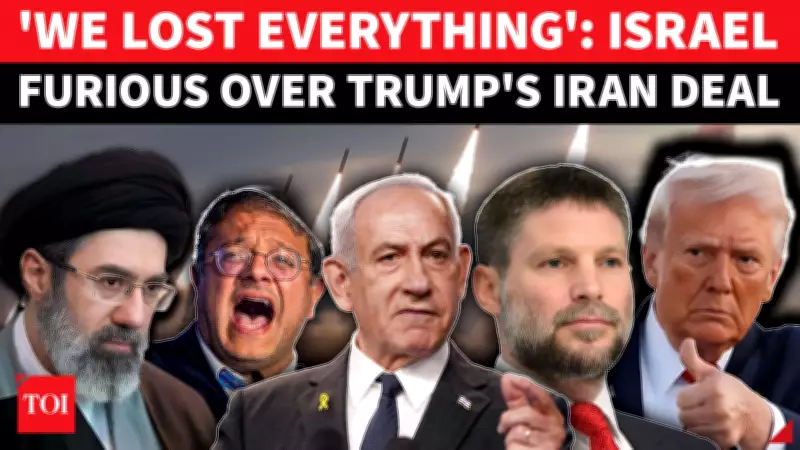
Israeli leaders across the political spectrum have voiced alarm over the Trump administration's shift toward diplomacy with Tehran, warning that the emerging deal could undermine Israel's security and reshape the Middle East balance of power.
Heated Reactions in Jerusalem
Prime Minister Benjamin Netanyahu convened an emergency security cabinet meeting, where ministers described the U.S. pivot as a 'strategic betrayal.' Opposition leader Yair Lapid accused Washington of 'rewarding aggression' and demanded an immediate reversal of the policy.
'We fought wars for this? To watch Iran gain legitimacy while we are left exposed?' a senior Israeli defense official told local media. The official, speaking on condition of anonymity, added that the deal would provide Tehran with billions in sanctions relief while failing to dismantle its nuclear infrastructure.

Security Concerns Mount
Israeli intelligence assessments indicate that Iran could use the diplomatic window to accelerate its missile program and expand support for proxy groups like Hezbollah. The Israeli military has reportedly raised its alert level along the northern border and conducted drills simulating multi-front conflict.
Defense Minister Yoav Gallant stated, 'This deal does not prevent Iran from obtaining a nuclear weapon; it merely postpones the inevitable and provides them with financial resources to destabilize the region.'
Growing U.S.-Israel Divide
The rift between Washington and Jerusalem has widened in recent weeks, with the Trump administration pushing for a comprehensive agreement that includes regional security guarantees. Israeli officials, however, view the concessions as too generous and the verification mechanisms as insufficient.
Former Mossad chief Yossi Cohen warned in a Knesset hearing, 'We are witnessing a repeat of the 2015 JCPOA mistakes, but with even weaker safeguards. This is not diplomacy; it is appeasement.'
Regional Implications
Saudi Arabia and the United Arab Emirates have cautiously welcomed the U.S.-Iran talks, but Israel fears that a deal could embolden Iran's proxies in Syria, Iraq, and Yemen. Hezbollah leader Hassan Nasrallah praised the negotiations as a 'victory for resistance,' further alarming Israeli strategists.
An Israeli military intelligence report concluded that the deal could trigger a new arms race in the region, as other states seek to counter Iran's enhanced capabilities.
Diplomatic Pushback
Israel has launched an intensive lobbying campaign in Washington, urging Congress to impose new sanctions on Iran and condition any agreement on the complete dismantlement of its nuclear program. Israeli diplomats have also reached out to European allies to build opposition to the deal.
Foreign Minister Gideon Sa'ar said, 'We will use every tool at our disposal to prevent a dangerous and irreversible mistake. Israel's security is not negotiable.'
The coming weeks will be critical as the U.S. and Iran finalize terms, with Israel vowing to take unilateral action if its red lines are crossed.