

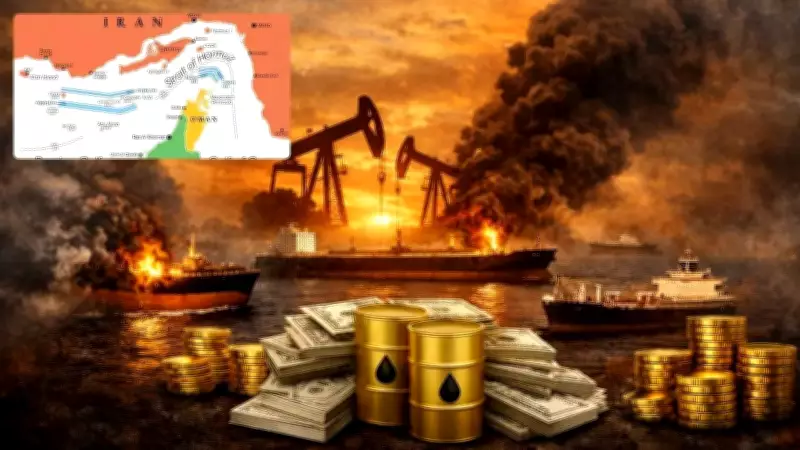
US-Iran War Triggers Sharp Oil Shock, Boosting Adversaries
The escalating conflict between the United States and Iran is driving a politically dangerous oil shock, with crude prices surging above $100 a barrel. One of the most significant ironies of this war is that it is financially enriching both Tehran and Moscow, two of Washington's primary adversaries. As Iran targets Gulf energy assets and severely disrupts shipping through the critical Strait of Hormuz, the regional security crisis has transformed into a substantial revenue windfall for these nations.
Immediate Market Impact and Asian Struggles
The immediate market damage is acutely felt across Asia, where importers are forced to ration fuel, release strategic reserves, and scramble for alternative supplies. Governments in the region are moving into energy "triage" mode, attempting to manage shortages and prevent price spikes from destabilizing their economies. This situation underscores the global ripple effects of the conflict, with large parts of Asia bearing the brunt of supply disruptions.
Financial Windfall for Iran and Russia
In stark contrast, the financial upside flows directly to Iran and Russia. Iran continues to export oil despite ongoing war and sanctions, likely earning more than $140 million daily as prices surge. Washington has tacitly allowed these exports to continue, aiming to avoid worsening the global supply crunch. Treasury Secretary Scott Bessent explicitly stated that the U.S. is permitting Iranian oil shipments to supply the world, highlighting a key contradiction: while militarily striking Iran, the U.S. is not fully choking off its oil revenue.

Data from Kpler indicates that approximately 24 million barrels of Iranian crude have passed through the Strait of Hormuz since the conflict began, with at least 13 supertankers loading at Kharg Island. Iran leverages a "shadow fleet" of vessels designed to move sanctioned oil under risky conditions, enabling it to monetize the conflict effectively. Every day of continued exports provides Tehran with hard-currency revenue, capitalizing on market desperation for barrels.
Russia Emerges as Strategic Beneficiary
Russia may be the larger strategic beneficiary, earning as much as $150 million daily in extra budget revenues from surging oil prices. This could translate to an additional $3.3 billion to $4.9 billion by the end of March if current pricing holds. The disruption in Gulf supplies has shifted demand dynamics, with India and China turning back to Russian oil in larger volumes. Indian imports of Russian crude have surged by 50% to 1.5 million barrels daily, according to Kpler data.
Russian crude is now trading at a premium, reversing previous sanctions discounts. Analysts note that the de facto closure of the Strait of Hormuz has made Russian oil "harder to shun," providing the Kremlin with a critical budget boost at a pivotal moment.
Market Dynamics and Allied Hesitation
Analysts describe a market where price, politics, and wartime shipping risks reinforce each other. Rebecca Babin of CIBC Private Wealth Group noted that the market is frantically trying to determine the extent and duration of supply disruptions. Chris Weston of Pepperstone highlighted the risk of prolonged constraints in the Strait of Hormuz, with limited capacity from the U.S. and its allies to alter the dynamic.
Many U.S. allies, including Germany, Spain, Italy, Japan, and South Korea, have reacted coolly to President Donald Trump's demands for support in reopening the strait. This hesitation signals that replacement barrels are prioritized, further enhancing the profitability of Russian and Iranian oil.
Future Uncertainties and Limitations
The immediate gains for Iran and Russia come with significant limitations. For Iran, the central question is whether Washington will continue tolerating exports. Analysts suggest that if escalation continues, moves to restrict Iranian oil could gain traction in the Oval Office. Military risks also persist, with discussions about potential U.S. actions against Kharg Island, though such operations would be fraught with danger.

Russia's gains are vulnerable to market normalization, described as a "sugar high" that does not address deeper structural issues like damaged infrastructure, weak investment, and sanctions. Despite short-term revenue boosts, long-term erosion of Russia's energy sector remains a concern.
Broader Implications and Conclusion
Currently, the war produces an uncomfortable outcome for Washington and its partners. Energy-importing economies face higher costs, Asian governments implement conservation measures, and U.S. allies are pressured to address a maritime crisis they did not choose. The two states benefiting most from the oil shock are precisely those the West has long sought to isolate.
The military logic of the war contrasts sharply with its market logic. Each day the Strait of Hormuz remains constrained, the oil market delivers a clear verdict: Tehran secures cash, Moscow rebuilds fiscal breathing room, and the costs are exported globally. This dynamic underscores the complex interplay between geopolitics and economics in modern conflicts.





