

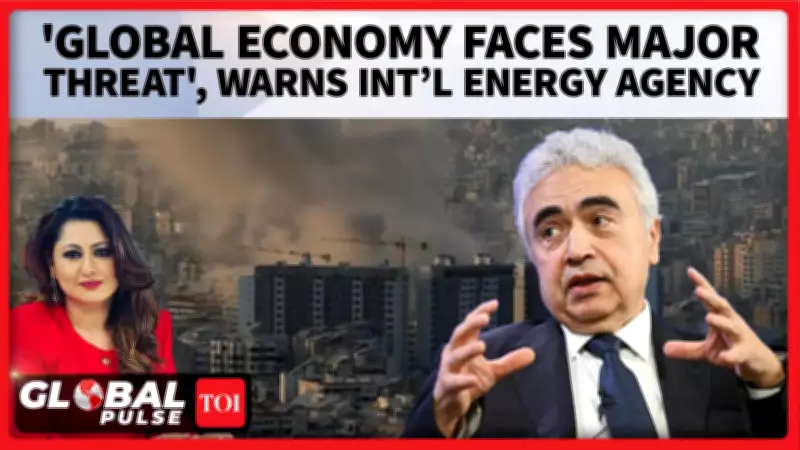
Global Energy Crisis Surpasses Historical Shocks, Warns IEA Chief
The head of the International Energy Agency, Dr. Fatih Birol, has issued a dire warning that the global economy faces what he describes as a "major, major threat" from an escalating energy crisis. According to his stark assessment, the current situation stemming from the Middle East conflict represents a more severe challenge than the combined impacts of the twin oil shocks of the 1970s and the Russia-Ukraine war's disruption to gas supplies.
Unprecedented Scale of Disruption
Dr. Birol characterized the crisis as "very severe," emphasizing that it eclipses previous energy emergencies in both scale and complexity. The warning comes as global capitals grapple with the economic implications of sustained conflict in the Middle East, particularly involving Iran and its regional proxies. The International Energy Agency's analysis suggests that the current disruptions to energy markets are creating ripple effects across the global economy that could persist for years.
Historical Context and Comparison
The 1970s oil shocks fundamentally reshaped global energy policies and economic structures, while the Russia-Ukraine conflict created unprecedented volatility in European gas markets. Dr. Birol's assessment indicates that the present crisis combines elements of both historical events while introducing new dimensions of geopolitical complexity. The Middle East conflict has already demonstrated its capacity to disrupt critical shipping lanes and energy infrastructure, creating supply constraints that affect markets worldwide.

Geopolitical Dimensions and Regional Tensions
The energy crisis has emerged against a backdrop of escalating regional tensions, with multiple actors including Iran, the United States, Israel, and various proxy groups engaged in military and economic confrontations. Recent developments have included:
- Iranian attacks forcing US troop withdrawals from Arab nations
- Hezbollah conducting rocket, drone, and artillery attacks on northern Israel
- Pro-Iran Iraqi resistance intensifying drone strikes against US and Israeli targets
- Iran revealing advanced military capabilities including missile cities and long-range drones
Global Economic Implications
The International Energy Agency's warning underscores the interconnected nature of global energy markets and the vulnerability of the world economy to regional conflicts. As energy prices fluctuate and supply chains face disruption, governments and industries worldwide must prepare for potential economic turbulence. The crisis has already prompted emergency discussions among major energy-consuming nations about strategic reserves and alternative supply arrangements.
Looking Forward: Challenges and Responses
Dr. Birol's assessment serves as a clarion call for coordinated international action to address both the immediate energy supply challenges and the longer-term structural vulnerabilities in global energy systems. The crisis highlights the urgent need for:
- Enhanced energy security measures and diversification strategies
- Accelerated transition to renewable energy sources
- Improved diplomatic channels to de-escalate regional conflicts
- Strengthened international cooperation on energy policy and crisis management
As the situation continues to evolve, the International Energy Agency will play a crucial role in monitoring developments and advising member nations on appropriate responses to this unprecedented energy challenge.






