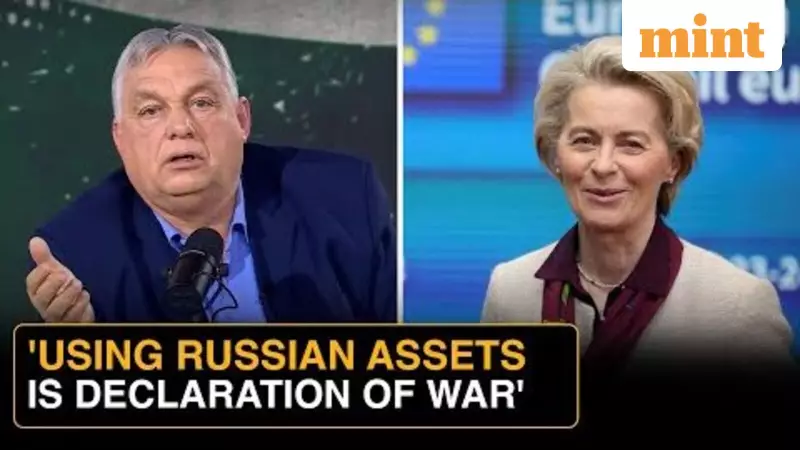
Hungarian Prime Minister Viktor Orban has launched a fierce attack on the European Union's leadership, accusing Brussels of pushing the bloc towards a dangerous confrontation with Russia. The controversy centres on a contentious EU proposal to utilise frozen Russian state assets to fund military aid for Ukraine.
Orban's "Declaration of War" Accusation
In a fiery public address, Prime Minister Orban condemned the plan as a severe escalation. He stated that seizing the approximately €200 billion in frozen Russian central bank reserves and redirecting them to support Kyiv would amount to a "declaration of war" against Moscow. Orban argued that this move fundamentally crosses a legal and strategic red line, taking the conflict into uncharted and perilous territory.
The Hungarian leader delivered these sharp criticisms during a political rally held in the southern town of Mohacs on December 16, 2025. He accused the EU establishment of deliberately misleading its own citizens about the true implications and risks of the asset seizure plan.

Shifting Burden and Secret Talks
Orban detailed his primary objections, focusing on economic and diplomatic concerns. He warned that the proposed mechanism, which involves using the frozen assets as collateral for loans, would ultimately shift a massive financial burden onto European taxpayers. According to his analysis, Brussels is creating a complex financial structure where EU citizens will be left liable if the plan fails or if Russia retaliates economically.
In a further explosive claim, Orban alleged that secret negotiations have been ongoing between the United States and Russia, deliberately bypassing European capitals. He suggested that major decisions about the war's future and potential settlements are being made without EU input, reducing the bloc's role to that of a mere funder following a script written by others.
A Deepening Rift Within the European Union
The strong rhetoric from Budapest highlights a significant and growing division within the European Union regarding the strategy for supporting Ukraine. Orban's Hungary has consistently been the most vocal critic of the EU's collective approach, often blocking or delaying decisions related to sanctions and aid.
This latest confrontation exposes the raw nerves over the legal and financial risks associated with the unprecedented step of seizing sovereign assets. Other member states, while supportive of Ukraine, have also expressed private reservations about the potential precedent it sets and the possibility of lengthy legal challenges from Russia.
The rally in Mohacs served as a platform to amplify this dissent, signalling to both the Hungarian public and EU partners that Budapest will continue to resist this policy direction. The standoff raises serious questions about the EU's ability to present a united front as the conflict prolongs and the financial costs mount.
Implications for Unity and Future Policy
The consequences of this rift are substantial. It complicates the EU's decision-making process at a critical juncture in the war, potentially delaying crucial financial support for Ukraine. The public disagreement also provides propaganda leverage to Moscow, which can point to European disunity.
Furthermore, Orban's warnings about taxpayer burden resonate with populist and sceptical voices across the continent, potentially influencing public opinion in other member states. The allegation of secret US-Russia talks, if proven or widely believed, could further erode trust in the transatlantic coordination that has underpinned the Western response to the invasion.
As the debate intensifies, the EU finds itself grappling not only with an external conflict but also with an internal struggle to define the limits of its economic warfare and maintain cohesion among its 27 diverse member states.