

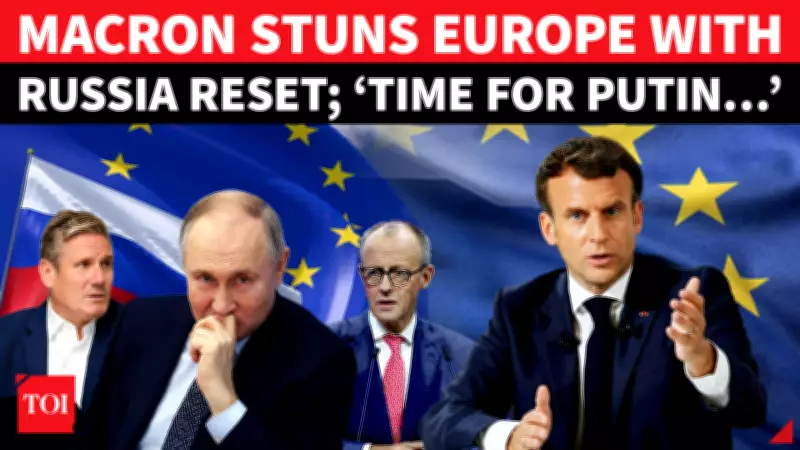
Macron's Bold Appeal for Russia Talks Sends Shockwaves Across Europe
In a move that has reverberated through diplomatic circles, French President Emmanuel Macron has issued a startling call for European leaders to re-engage in direct dialogue with Russia, marking a potential shift in the continent's approach after years of heightened confrontation. Speaking candidly to German media outlets, Macron emphasized the urgent need for Europe to confront hard geopolitical realities and pursue independent negotiations with Moscow, free from external pressures or dependencies.
A Strategic Pivot Towards Diplomatic Engagement
Macron articulated that Europe must carve out its own path in dealing with Russia, suggesting that preliminary discussions could commence as early as December. He stressed the importance of not allowing the situation in Ukraine to become a stumbling block, advocating for talks that proceed without imposing conditions on Kyiv or relying on the influence of outside powers. This stance represents a significant departure from the unified front often presented by Western allies in recent years.
Kremlin's Response and European SkepticismThe Kremlin has publicly welcomed Macron's remarks, viewing them as a positive step towards thawing frosty relations. However, the proposal has ignited fierce debate among European policymakers and analysts, many of whom warn of the profound mistrust that has accumulated due to months of sharp accusations and geopolitical maneuvering between Paris and Moscow.

Reigniting the Debate on Europe's Security Future
Macron's initiative has forcefully reignited discussions about the long-term security architecture of Europe and its complex relationship with Russia. Critics argue that reopening dialogue without concrete concessions from Moscow could undermine collective security efforts, while supporters see it as a pragmatic necessity in an increasingly multipolar world.
Key Implications of Macron's Stance- Potential recalibration of Europe's diplomatic strategy towards Russia.
- Increased scrutiny on the balance between dialogue and deterrence in European security policy.
- Renewed focus on Europe's autonomy in foreign affairs amidst global power shifts.
The French president's call underscores a growing sentiment that Europe must navigate its own course in managing relations with Moscow, even as it remains aligned with broader international concerns. As debates intensify, the coming months will be critical in determining whether this overture leads to substantive talks or further diplomatic stalemate.






