

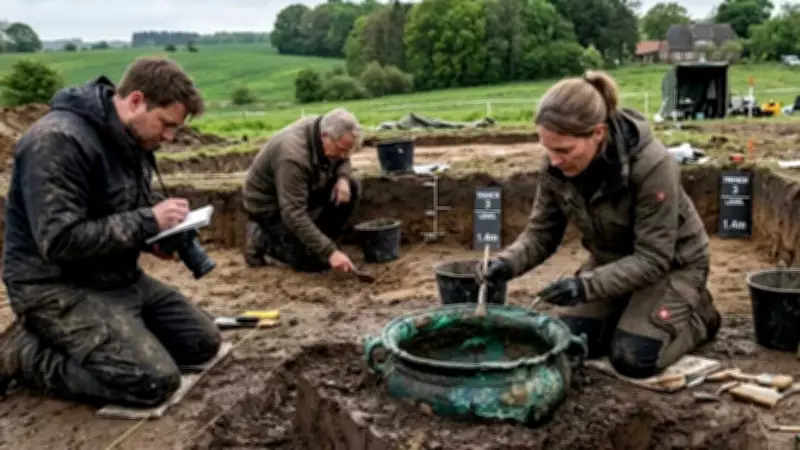
Groundbreaking Discovery of Ancient Bronze Cauldrons in Northern Germany
In a remarkable archaeological breakthrough, researchers have unearthed exceptionally rare bronze cauldrons dating from the 3rd to the 5th centuries AD in Schaalby, located in northern Germany. This significant find emerged through a collaborative effort between the Archaeological State Office of Schleswig-Holstein and Aarhus University, marking a pivotal moment in our understanding of ancient European history.
Vestland Cauldrons: Redefining Historical Trade Networks
The discovered artifacts, known specifically as Vestland cauldrons, provide crucial evidence of extensive trade and cultural exchange during antiquity. Previously, historians believed these elite goods were confined primarily to Scandinavian regions and the Rhine Basin. However, their presence in northern Germany presents a substantial challenge to established theories about the scope and reach of Roman-period trade networks.
These findings indicate that long-distance exchange networks connected local elite groups of the Roman world with Northern European elites between the 3rd and 5th centuries AD. The research suggests there were trade, diplomatic, and ritual exchanges between the Roman Empire and the decentralized, heterogeneous communities of Northern Europe long before the Viking Age emerged.

Advanced Technological Preservation Methods
Given the fragile nature of the ancient metal, archaeologists employed innovative non-destructive techniques to ensure the cauldrons' preservation. The methodology included:
- Block lifting: Carefully excavating the cauldrons with surrounding dirt to prevent collapse during removal
- Computed tomography (CT) scanning: Creating detailed internal images without physical intrusion
- Controlled laboratory examination: Systematic analysis in protected environments
This advanced technological approach allows researchers to examine the vessels' interiors thoroughly while maintaining archaeological integrity. The imaging process may reveal whether the cauldrons contained objects or if additional grave goods are associated with them, potentially uncovering new insights into ancient practices.
Ceremonial Significance and Social Hierarchy Insights
Initial observations indicate the cauldrons were deliberately placed inside each other, suggesting they formed a ceremonial cache or sacred burial offering. The intentional interment of such valuable imported items likely signifies their importance as symbols of social rank and spiritual value among indigenous Germanic peoples.
Continued investigation by the Archaeological State Office for Schleswig-Holstein will focus on determining the original purpose of this deposit. Researchers will particularly examine whether any deposited items were organic in nature, which could provide additional information about ancient dining practices or burial customs during the Migration Period.
Broader Historical Implications
This discovery fundamentally enhances our understanding of social hierarchies and economic interconnectivity during a crucial historical era. The Vestland cauldrons from Schaalby reflect an extensive trade network between Northern European elites and Rome that was more expansive than previously estimated by historians.
The ongoing research promises to reshape academic perspectives on the complexity of ancient European societies and their relationships with the Roman Empire, offering new dimensions to our comprehension of cultural exchange, economic systems, and social structures during the Migration Period.






