US Submarine Strike Sinks Iranian Warship, Over 85 Sailors Killed
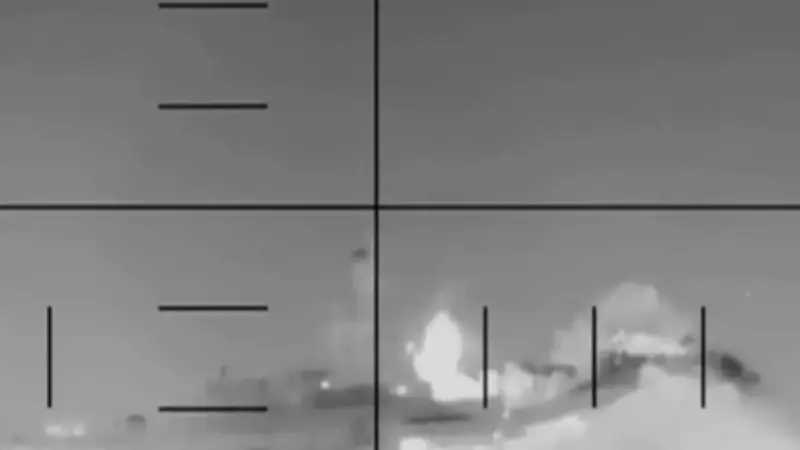
In a dramatic escalation of military tensions, a United States submarine launched a torpedo that struck and sank an Iranian warship in the Indian Ocean, resulting in the deaths of at least 85 Iranian sailors. The Pentagon has released compelling footage capturing the exact moment the vessel was hit, underscoring the severity of this incident amid the ongoing US-Israel campaign against Iran.
Details of the Deadly Attack
The targeted ship was identified as the Iranian frigate IRIS Dena, which went down early Wednesday after being hit by a torpedo fired from a US submarine. US Defense Secretary Pete Hegseth addressed reporters, stating, "An American submarine sunk an Iranian warship that thought it was safe in international waters. Instead, it was sunk by a torpedo." He described the attack as "quiet death" and highlighted that this marks the first US sinking of an enemy ship by torpedo since World War II.
Hegseth emphasized the strategic implications, noting, "Like in that war, we are fighting to win." The Pentagon framed the strike as part of its broader efforts in the ongoing conflict with Iran, demonstrating Washington's extensive military reach across global waters.

Rescue Efforts and Casualty Toll
Sri Lankan authorities played a crucial role in the aftermath, responding to a distress call issued at dawn. According to reports, 32 sailors from the Iranian frigate were rescued, but 148 other crew members remain missing, with hopes of finding survivors rapidly diminishing. Sri Lanka's foreign minister, Vijitha Herath, informed parliament that rescue vessels reached the site approximately 40 kilometers south of the port of Galle within an hour of the call. However, by the time they arrived, the frigate had already sunk, leaving only an oil patch on the water's surface.
A Sri Lankan defense official told AFP, "We are keeping up a search, but we don't know yet what happened to the rest of the crew." Navy spokesman Buddhika Sampath confirmed that the navy acted under its international maritime obligations, stating, "We responded to the distress call under our international obligations, as this is within our search and rescue area in the Indian Ocean." He added that bodies had been recovered from the sinking site, with Sri Lankan police later reporting that 87 bodies of Iranian sailors had been found as search operations continued off the southern coast.
Background and Regional Implications
The IRIS Dena had previously participated in a military exercise near India's Visakhapatnam before traversing the Indian Ocean, according to officials. This incident occurs against the backdrop of escalating tensions in the Middle East, with the US and Israel intensifying their military actions against Iran. Sri Lanka, maintaining a neutral stance in the widening conflict, has repeatedly called for dialogue to resolve the crisis.
The rescued sailors were taken to a hospital in southern Sri Lanka, while naval vessels and aircraft continued scouring the area for any remaining survivors. The attack not only highlights the volatile nature of current geopolitical dynamics but also raises concerns about further escalations in the region.
Key Points to Note
- Casualties: At least 85 Iranian sailors killed, with 32 rescued and 148 missing.
- Location: Indian Ocean, about 40 km south of Galle, Sri Lanka.
- Weapon Used: Torpedo fired from a US submarine.
- Historical Context: First US sinking of an enemy ship by torpedo since World War II.
- International Response: Sri Lanka conducted rescue operations under maritime obligations, recovering bodies and aiding survivors.
This tragic event underscores the deadly consequences of military confrontations in international waters and the urgent need for diplomatic resolutions to prevent further loss of life.