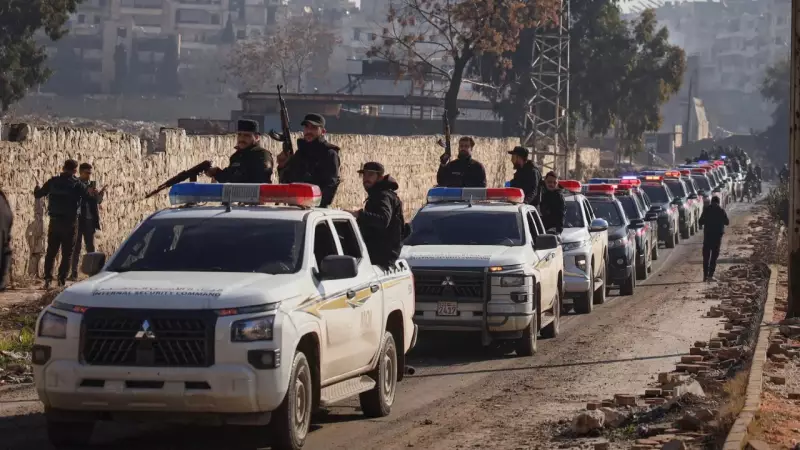
The Syrian military declared a stop to its combat operations in a key Aleppo neighbourhood on Saturday, following days of violent clashes with Kurdish fighters that have resulted in civilian casualties and a new wave of displacement.
Ceasefire Announcement and Ongoing Tensions
In an official statement broadcast by the state news agency SANA, the army proclaimed a halt to all military activities in the Sheikh Maqsud neighbourhood, effective from 3:00 pm local time. The announcement included plans for the transfer of Kurdish fighters to the Kurdish-administered city of Tabaqa in northeastern Syria.
However, the situation on the ground remained tense. An AFP correspondent on the scene reported that sporadic gunfire could still be heard in areas surrounding Sheikh Maqsud even after the official ceasefire time. This cast immediate doubt on the completeness of the truce.

Roots of the Violence and Conflicting Claims
The clashes erupted after a breakdown in negotiations aimed at integrating the Kurdish-led autonomous administration and its armed wings into Syria's new government structure. The Syrian army had earlier set a deadline for Kurdish fighters to withdraw from Sheikh Maqsud, which was the last district in Aleppo under their control.
When the deadline passed, government forces launched strikes. A military source told SANA that several members of the Syrian Democratic Forces (SDF) were arrested during a subsequent security sweep, and residents were advised to stay indoors.
The Kurdish forces strongly contested the government's narrative. They rejected claims that the army controlled most of Sheikh Maqsud, labelling them as false and misleading. In a statement, they said fighting with government militias was continuing and condemned the shelling as systematic criminal conduct aimed at spreading terror.
Human Cost and Regional Repercussions
The human toll of the brief but intense conflict has been significant. At least 21 civilians have been killed, according to figures from both sides, and tens of thousands of people have fled Aleppo to escape the violence. Flights at Aleppo airport were suspended until late Saturday due to the instability.
This fighting represents some of the most severe since Syria's new Islamist authorities assumed power following the ouster of long-time leader Bashar al-Assad in December 2024. The conflict also highlights the fragile state of the country, with analysts warning it raises serious questions about Damascus's capacity to stabilise Syria after 14 years of war.
The SDF, which controls large parts of northern Syria and was instrumental in defeating the Islamic State group in 2019, finds itself in a difficult position. Turkey, a key ally of Syria's new leadership, views the SDF's main component as an offshoot of the banned Kurdistan Workers' Party (PKK).
International actors have expressed concern. The United Nations voiced alarm over the impact on civilians. US envoy Tom Barrack discussed the crisis with Jordan's foreign minister, with both sides emphasising the need to consolidate the ceasefire and ensure the safe withdrawal of SDF forces from Aleppo. Kurdish official Elham Ahmad accused Syrian authorities of choosing war and undermining previous agreements.