US Soldiers Publicly Challenge Pentagon's Version of Deadly Iranian Drone Strike
In a powerful and unprecedented public challenge, survivors of what has been described as the deadliest Iranian attack on American forces since the wider regional conflict began have directly disputed the official Pentagon account of events. The attack, which occurred on March 1 at the Port of Shuaiba in Kuwait, resulted in the tragic deaths of six US service members and left more than twenty others injured.
Speaking publicly for the very first time in detailed interviews with CBS News, members of the targeted Army unit provided a starkly different narrative from that presented by US military leadership. Their testimonies contradict the description offered by US Defence Secretary Pete Hegseth, who had characterized the incoming drone as merely a 'squirter' that managed to slip through sophisticated, layered defenses at a fortified military facility.
"A Falsehood": Soldiers Reject Official Framing of the Attack
One injured soldier, whose identity was protected, vehemently rejected the Pentagon's framing of the incident. "Painting a picture that 'one squeaked through' is a falsehood," the soldier told CBS News. "I want people to know the unit was unprepared to provide any defense for itself. It was not a fortified position."

Despite their criticism of the preparedness and security situation, the service members were quick to honor the bravery and sacrifice of their comrades during the chaotic aftermath. "I don't think that the security environment or any leadership decision diminishes in any way their sacrifice or their service," a member of the Army's 103rd Sustainment Command stated. "Those soldiers put themselves in harm's way and I'm immensely proud of them, and their family should be proud of them."
Detailed Survivor Account: "Everything Shook"
The survivors provided the first detailed, on-ground description of the horrific attack. According to their accounts, the events unfolded after a series of escalating alerts in the hours leading up to the strike. A crew of approximately 60 troops had initially taken cover in a cement bunker following incoming missile warnings. After an all-clear signal was given, as reported by CNN, they returned to their workspace—a small logistics hub described as consisting of tin structures and concrete barriers.
Operations had just resumed when, about thirty minutes later, the drone impact occurred. "Everything shook," one soldier recounted. "And it's something like what you see in the movies. Your ears are ringing. Everything's fuzzy. Your vision is blurry. You're dizzy. There's dust and smoke everywhere."
The soldier described a scene of severe injuries and utter chaos in the immediate aftermath:
- Head wounds and heavy bleeding
- Numerous perforated eardrums
- Shrapnel injuries causing bleeding from abdomens, arms, and legs
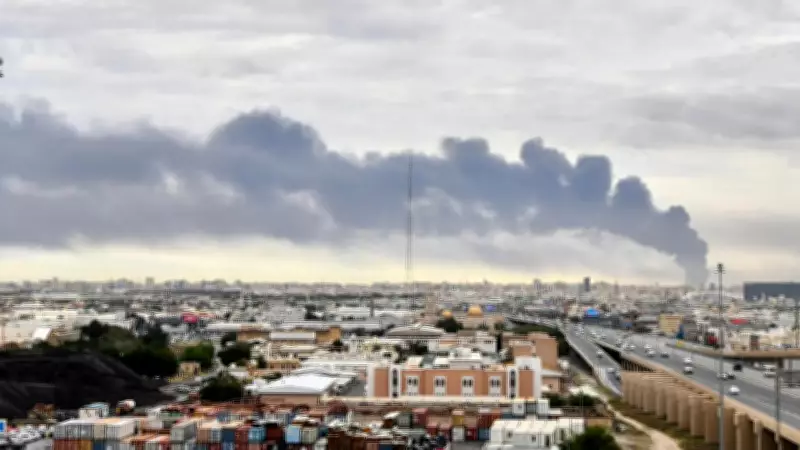
Smoke billowed from the building as fires burned through the compound. The strike was a direct hit on their operations centre, killing six US personnel and injuring more than twenty others. Officials have confirmed this as the deadliest single attack on US forces since the year 2021.
Chaotic Aftermath and Heroic Efforts
In the devastating wake of the explosion, soldiers immediately began treating the wounded using makeshift bandages and tourniquets. Some even drove injured personnel to hospitals in civilian vehicles before formal evacuation teams could arrive on the scene.
"It was chaos," another injured soldier said. "There was no single line of patients to triage. You're on one side of the fire or you're on the other side of the fire."
The emotional toll remains heavy for the survivors. "One of the hardest things for me is that I know we didn't get everybody out," another survivor confessed. "So I know that at this point there are still soldiers inside there that still haven't been identified and evacuated."

Questions Raised About Deployment Strategy and Base Security
The deadly strike has ignited serious questions about the deployment strategy of US forces in the region during the ongoing wider conflict. In the weeks preceding the attack, many US personnel were reportedly repositioned across the region to reduce exposure to Iranian missile and drone threats—a move soldiers described as an effort to “get off the X,” meaning to vacate high-risk areas.
However, members of the 103rd Sustainment Command revealed that their unit was specifically moved to the Port of Shuaiba facility, which they characterized as an older, lightly protected installation. Soldiers stated that the site relied on concrete blast barriers designed for mortar or rocket fire, not for defending against modern aerial drone strikes. One soldier described the protection as minimal.
"It's just kind of a classic, older military base," one soldier recalled. "Some small barriers. There's a bunch of little tin buildings where we can set up makeshift offices. From a bunker standpoint, that's about as weak as one gets."
They also expressed that they had prior concerns about intelligence indicating the area could be within Iranian strike range, yet no clear justification was provided for their deployment to this vulnerable location. The survivors' accounts present a compelling challenge to the official narrative, highlighting potential gaps in preparedness, intelligence, and force protection for US troops stationed in volatile regions.