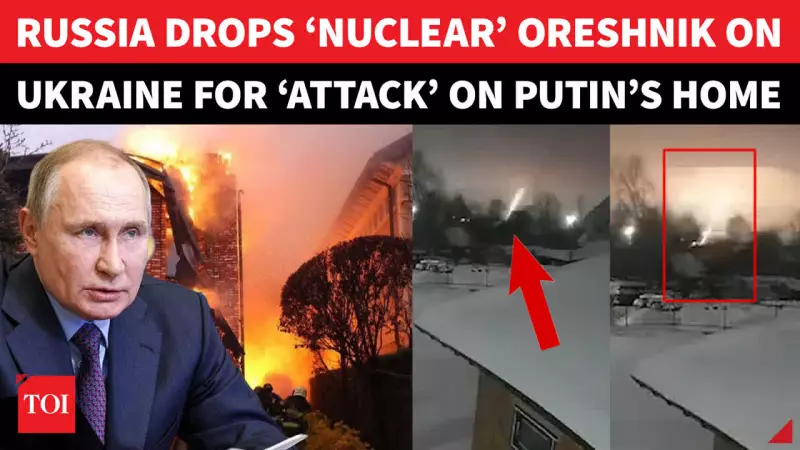
In a significant and dangerous escalation of the ongoing conflict, Russia has for the first time confirmed using its advanced Oreshnik ballistic missile in a massive overnight assault on Ukraine. The Russian Defence Ministry stated this large-scale attack was a direct response to what it claims was a Ukrainian drone strike targeting President Vladimir Putin's private residence, an allegation strongly denied by Kyiv.
Massive Retaliatory Barrage Launched
According to official Russian statements, the military launched a formidable combination of 36 missiles and 242 drones at targets across Ukraine. The onslaught, which occurred overnight, focused on critical infrastructure sites. Notably, some strikes hit areas near the western city of Lviv, a location perilously close to the borders of NATO and European Union member states. This geographical choice has amplified concerns about the conflict's potential spillover.
Ukrainian Defence and Civilian Casualties
Ukrainian air defence forces were reportedly active through the night, managing to intercept a majority of the incoming missiles and drones. However, the scale of the attack meant some threats penetrated the defences. In the capital city of Kyiv, the strikes resulted in four civilian fatalities and left at least 22 people wounded. The attack has drawn sharp condemnation from Ukrainian officials, with the country's Foreign Minister issuing a stark warning that such actions represent a grave threat to the broader security architecture of Europe.

International Reactions and Denials
The Kremlin's justification for the unprecedented missile strike has been met with scepticism and rejection internationally. Kyiv has flatly denied any involvement in an attack on President Putin's home. Adding a significant voice to the dispute, U.S. President Donald Trump also dismissed Moscow's claims regarding the alleged drone incident. The use of the new Oreshnik missile, which is known to be capable of carrying nuclear warheads, marks a worrying new phase in the war, introducing a more potent and strategically significant weapon into Russia's conventional arsenal against Ukraine.
The event, dated January 9, 2026, underscores the volatile and increasingly high-stakes nature of the war, with new weapon systems being deployed and accusations flying between the warring nations and their international allies. The proximity of strikes to NATO borders is likely to trigger further discussions within the alliance about regional security and defence preparedness.