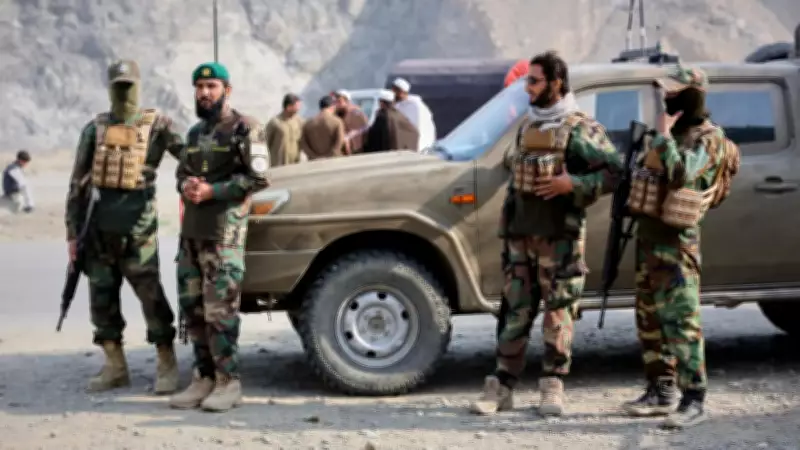
Pakistan Launches Major Airstrikes on Afghan Cities, Declares 'Open War'
In a dramatic escalation of regional tensions, Pakistan conducted extensive airstrikes on multiple Afghan cities including the capital Kabul on Friday, with Islamabad's defense minister Khawaja Asif declaring the neighboring nations are now in an "open war" following months of intensifying border clashes.
Casualty Claims and Military Operations
Pakistan's military claimed to have eliminated more than 270 Taliban fighters and wounded over 400 others during the coordinated aerial assaults. The strikes targeted locations across Afghanistan under what Pakistani officials termed 'Operation Ghazab lil Haq,' which was launched early Friday morning in response to what Islamabad described as provocative actions by Afghan forces.
Afghanistan's Taliban government spokesman Zabihullah Mujahid provided a starkly different account, asserting that Afghan forces had killed 55 Pakistani soldiers during retaliatory operations. Mujahid claimed Taliban fighters successfully targeted what he described as "important military objectives" inside Pakistani territory, seizing 19 Pakistani military posts and two headquarters during overnight fighting.

Diplomatic Breakdown and Accusations
Asif leveled serious accusations against the Taliban leadership, claiming they had "turned Afghanistan into a colony of India" rather than focusing on development and regional stability. The Pakistani defense minister alleged without providing specific evidence that the Taliban had "gathered all the terrorists of the world in Afghanistan and began exporting terrorism."
The Pakistani official stated that Islamabad had exhausted all diplomatic channels, making "every effort to keep the situation normal through direct means and through friendly countries," but claimed the "Taliban became a proxy for India." This represents a significant deterioration in relations between the two neighboring countries that share a 2,611-kilometer border known as the Durand Line, which Kabul has never formally recognized.
Cultural References and Military Posturing
In his statement, Asif employed a culturally significant phrase, declaring "Now it will be 'Dama Dam Mast Qalandar'" - a reference to a spiritual song associated with Sindhi sufi saint Lal Shehbaz Qalandar. While the phrase literally translates to "every breath is ecstasy of Qalandar," in common parlance it suggests acting impulsively without considering consequences, indicating Pakistan's willingness to take decisive military action.
Taliban spokesman Mujahid responded with equally strong rhetoric, stating the recent strikes were intended to send a clear message that "our hand can reach their collar" and warning that any "malicious act" by Pakistan would be answered "in Islamabad."
Military Equipment and Border Tensions
According to Mujahid's statements reported by Tolo News, Afghan forces recovered significant military equipment during the clashes, including:
- Multiple weapons and ammunition caches
- One tank
- A military transport vehicle
The Taliban spokesman acknowledged that 13 Islamic Emirate soldiers were killed and 22 others wounded in the fighting. The border clashes reportedly began when Afghan Taliban attacked several check posts along the Pakistan-Afghanistan border late Thursday, apparently in retaliation for air strikes Pakistan conducted in Afghanistan's border areas the previous Sunday.
This escalation marks one of the most serious military confrontations between Pakistan and Afghanistan in recent years, with both sides demonstrating increased willingness to engage in direct conflict rather than diplomatic resolution. The situation continues to develop as regional powers monitor the volatile border region between the two nations.