

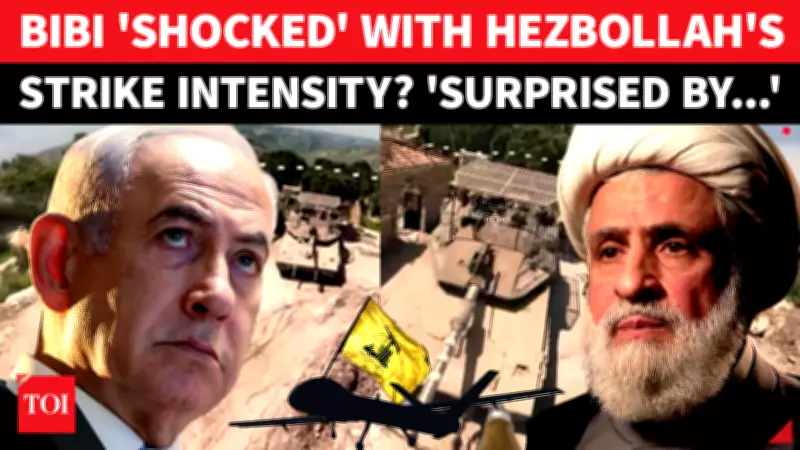
Hezbollah has significantly intensified its rocket and drone attacks against Israel following the Israeli military's expansion of ground operations deeper into southern Lebanon. According to Israeli media reports, the scale and frequency of the assaults have caught security officials by surprise, prompting emergency consultations led by Prime Minister Benjamin Netanyahu.
Hezbollah's Escalated Offensive
Northern Israeli cities have experienced repeated air raid sirens as Hezbollah targeted both military positions and population centers. The attacks have been described as more coordinated and widespread than anticipated, leading to heightened concerns within Israel's defense establishment.
Emergency Consultations and Response
In response to the unexpected escalation, Prime Minister Netanyahu convened urgent security meetings to assess the situation and coordinate a response. The Israeli military has expanded airstrikes across southern Lebanon and pushed troops further into Lebanese territory in an effort to counter the threat.

Fears of Broader Conflict
The escalating violence has raised fears of a broader regional conflict, despite earlier efforts to establish a ceasefire. The situation remains volatile, with both sides showing no signs of de-escalation. International observers have called for restraint, but the cycle of attacks and counterattacks continues to intensify.
Hezbollah's use of advanced drones and precision rockets has added a new dimension to the conflict, challenging Israel's air defense systems and forcing civilians in northern Israel to seek shelter frequently. The psychological impact on residents has been profound, with many living in constant fear of incoming attacks.
Israel's expanded ground operations aim to push Hezbollah forces away from the border and destroy their infrastructure. However, the guerrilla tactics employed by Hezbollah have made progress slow and costly. The conflict has also drawn in regional powers, with Iran and its proxies expressing support for Hezbollah, while the United States reaffirms its commitment to Israel's security.
As the situation develops, the international community watches closely, hoping to prevent a full-scale war that could destabilize the entire region. Diplomatic channels remain open, but trust between the parties is at an all-time low, making any potential ceasefire difficult to achieve.






