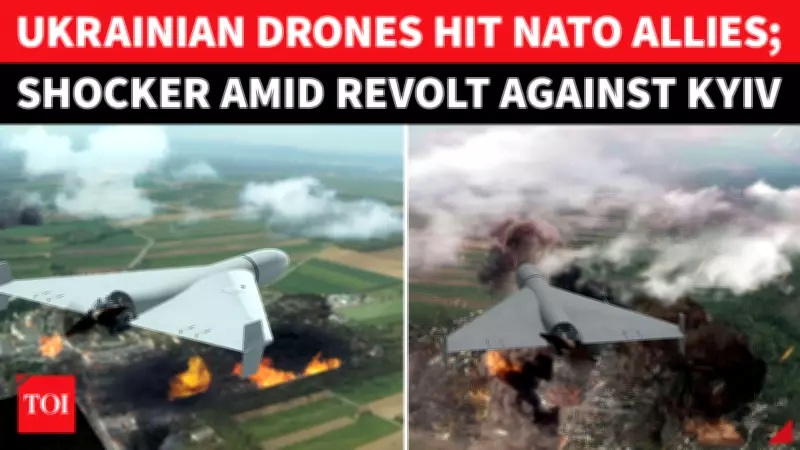
The war in Ukraine is spilling over into NATO territory. A Ukrainian kamikaze drone crashed approximately 40 kilometers inside Latvia, igniting a fire near the Russian border. This incident has exposed a growing divide within NATO over how to respond to such incursions.
NATO Allies React Differently
Finland, a recent NATO member, called the violation 'unacceptable,' emphasizing the need to protect alliance borders. However, Latvia's Defense Minister struck a different tone, stating that such incidents are the price of Russia's war and reaffirming support for Kyiv. This split highlights the delicate balance NATO must maintain between supporting Ukraine and preventing direct confrontation with Russia.
Massive Ukrainian Drone Swarm
The crash occurred as Ukraine launched a massive 500-drone swarm ahead of Russia's Victory Day, a major military holiday. The operation aims to disrupt Russian celebrations and demonstrate Kyiv's long-range strike capabilities. However, it also risks further accidents or provocations near NATO borders.

The 'protective bubble' of NATO's borders is being tested like never before. While the alliance has provided extensive military aid to Ukraine, direct violations of member states' airspace raise questions about escalation risks. Some analysts argue that such incidents could trigger Article 5, the collective defense clause, if deemed deliberate attacks.
Broader Implications
The incident underscores the challenges of containing the conflict. As Ukraine strikes deeper into Russian territory, the potential for miscalculation grows. NATO must now address internal disagreements while reinforcing deterrence without escalating the war. The coming days will be critical as allies assess the damage and decide on a unified response.