Kuwaiti Fighter Jet Suspected in Friendly Fire Incident That Downed Three US F-15s
In a dramatic and concerning development amid escalating regional hostilities linked to the Iran conflict, three United States F-15E Strike Eagle fighter jets were shot down over Kuwait on Sunday. American officials have formally described the event as an "apparent friendly-fire incident," casting a spotlight on the complexities and dangers of joint military operations in active combat zones.
Details of the Incident and Preliminary Findings
According to exclusive reporting by The Wall Street Journal, which cited individuals familiar with the preliminary investigation, the incident is suspected to have been caused by a Kuwaiti F/A-18 Hornet. Preliminary findings indicate that the Kuwaiti aircraft mistakenly launched missiles that struck the American F-15s during what were intended to be coordinated joint operations.
A US official, quoted in the report, provided chilling details: three missiles were fired toward the American jets, leading to their subsequent crash over Kuwaiti territory. In a fortunate turn of events, all six crew members aboard the three aircraft managed to eject safely. They were later recovered and are reported to be in stable condition, a relief amidst the operational tragedy.

The United States Central Command (CENTCOM) initially confirmed the episode, stating the aircraft were "mistakenly shot down by Kuwaiti air defences" during active combat conditions. These conditions reportedly included incoming threats from Iranian drones and missiles, highlighting the high-pressure, chaotic environment in which the error occurred. Investigations by both US and Kuwaiti authorities are rigorously ongoing to determine the exact sequence of events and failures.
What Is the F/A-18 Hornet Aircraft?
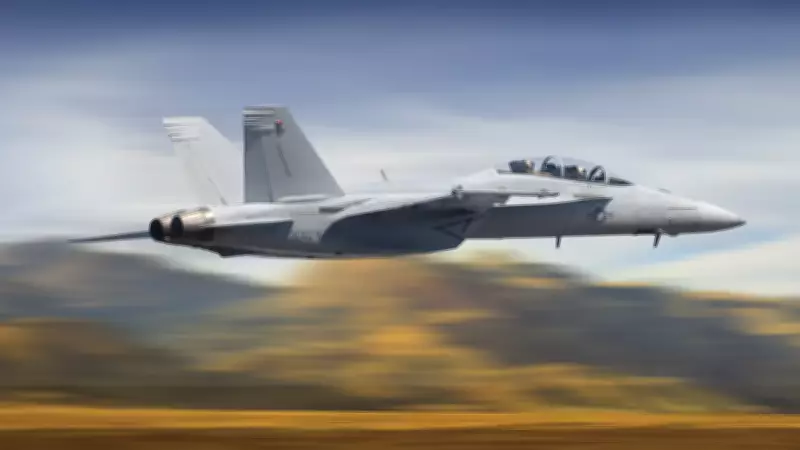
The aircraft at the center of this investigation, the F/A-18 Hornet, is a formidable piece of American military engineering. It is a US-made, twin-engine, supersonic multirole combat aircraft specifically designed to excel in both air-to-air combat and air-to-ground attack missions. The "F/A" designation itself signifies this dual fighter and attack role, making it a versatile asset.
Developed by McDonnell Douglas in partnership with Northrop, the Hornet entered service with the United States Navy in 1983. It was engineered from the outset for demanding aircraft carrier operations. The platform proved so successful that it was exported to several key US allies, including Kuwait. Following Boeing's acquisition of McDonnell Douglas in 1997, the company now manufactures the newer, more advanced variant known as the F/A-18 Super Hornet, which Boeing touts as the "backbone of carrier air wings."
Key Technical Features and Kuwait's Fleet
The legacy F/A-18 Hornet, like the one suspected in this incident, boasts several key features that make it a potent combat platform:
- Twin Turbofan Engines: Providing reliable and powerful thrust.
- High Speed: Capable of reaching a maximum speed of approximately Mach 1.7.
- Carrier-Capable Design: Built for takeoff and landing on aircraft carriers.
- Heavy Armament: Features nine external weapons stations for a variety of munitions.
- Advanced Missile Capability: Can carry both radar-guided and infrared air-to-air missiles.
- Internal Cannon: Armed with a built-in 20mm cannon for close-range engagements.
Kuwait placed its order for the F/A-18 Hornet in 1988, with deliveries occurring between October 1991 and August 1993. Beyond Kuwait and the United States, other nations like Australia also operate these jets. In a notable pop culture connection, the F/A-18 was prominently featured in the blockbuster film "Top Gun: Maverick" starring Tom Cruise, showcasing its capabilities to a global audience.
This incident underscores the inherent risks of modern aerial warfare and coalition operations, even among the closest of allies. As investigations proceed, the focus will be on understanding the breakdown in identification and communication to prevent future tragedies during high-stakes military engagements.