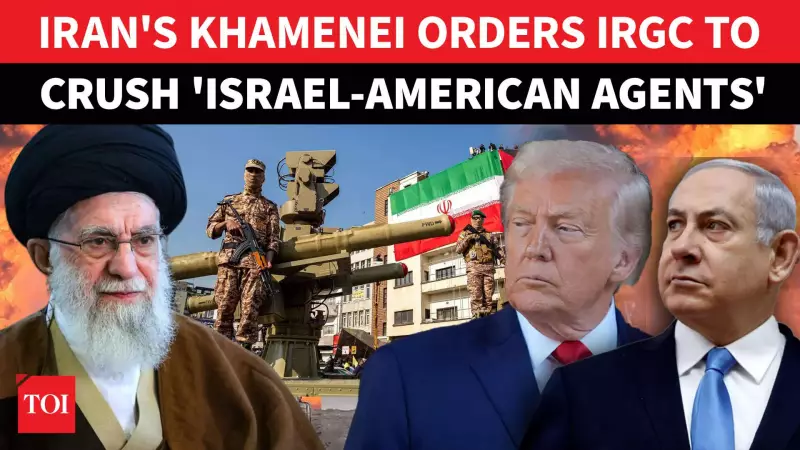
Iran's Supreme Leader, Ayatollah Ali Khamenei, has reportedly issued a critical order placing the Islamic Revolutionary Guard Corps (IRGC) on its highest state of alert. This decisive move comes as widespread protests across various Iranian cities enter a tense second week, presenting a significant challenge to the regime.
Regime's Response to Escalating Unrest
The order, confirmed by officials, elevates the IRGC's readiness to a level surpassing even that seen during last year's direct conflict with Israel. This underscores the growing concern within the Iranian leadership as demonstrations spread and security forces face increasing pressure. Analysts view the IRGC as the clerical establishment's most loyal and powerful military arm, making its full mobilization a clear signal of the situation's severity.
Reports from Iranian sources indicate that Khamenei is now relying heavily on the Guards to manage the crisis. In a show of force, underground facilities known as "missile cities" have been activated, though their specific role in the current civil unrest remains unclear. The protests, which have rocked multiple urban centres, represent one of the most sustained waves of public dissent in recent years.

International Dimension Adds to Tensions
Complicating the internal crisis is the open support for the protesters voiced by the United States. This external backing has further inflamed the situation, leading to a sharp rise in diplomatic tensions. The regime perceives this as foreign interference in its domestic affairs, likely contributing to the decision to deploy its most trusted forces at maximum readiness.
The combination of persistent domestic discontent and overt international support for the demonstrators has created a volatile scenario. The IRGC's elevated alert status means all its units—ground, aerospace, and naval—are on standby, prepared for rapid deployment. Security in the capital, Tehran, and other major cities has been visibly tightened, with reports of sporadic gunfire and clashes circulating on social media, though these are difficult to verify independently.
What This Means for Iran's Future
The activation of the IRGC at this unprecedented level during a domestic crisis marks a pivotal moment. It highlights the regime's assessment that the protests pose a fundamental threat. The move is likely intended to deter further demonstrations through a show of overwhelming force and to reassure hardline supporters of the government's resolve.
However, this militarized response also carries risks. It could potentially harden the resolve of protesters and lead to more severe confrontations. The international community, particularly the US stance, adds a layer of complexity that makes the outcome highly unpredictable. As the nation enters another week of turmoil, the world watches to see whether the regime's strongest pillar, the IRGC, can quell the unrest or if the public's demands will force a new chapter in Iran's history.