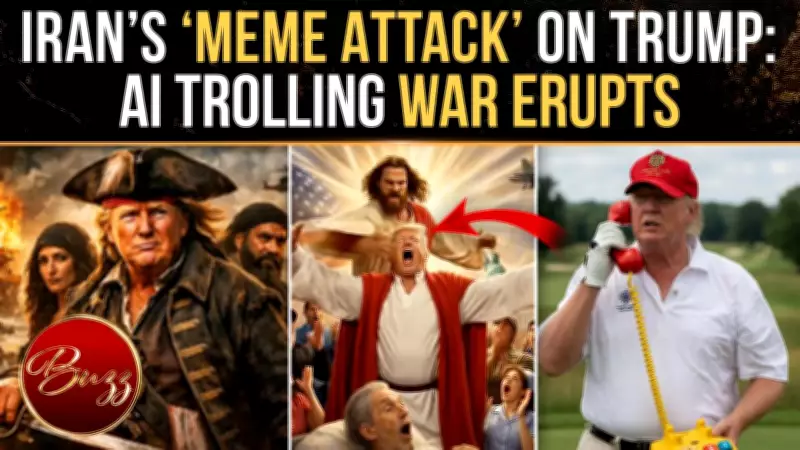
Iran has escalated its conflict with the United States into the digital realm, launching a coordinated meme war targeting former President Donald Trump. The campaign, described as a 'digital blitz,' leverages artificial intelligence-generated videos, pop culture parodies, and viral social media posts to undermine Trump's image and influence public opinion.
Coordinated Online Assault
Iranian embassy accounts and state-affiliated media have amplified the offensive, sharing content that mocks Trump's policies and personal demeanor. The memes often feature AI-generated deepfakes, placing Trump in absurd scenarios or juxtaposing him with historical figures to highlight perceived failures. These posts have gone viral on platforms like X (formerly Twitter), Instagram, and Telegram, reaching millions of users globally.
AI and Pop Culture as Weapons
The campaign employs sophisticated AI tools to create realistic yet satirical videos. One widely shared clip shows Trump being interviewed by a fictional news anchor, where his responses are manipulated to appear incoherent. Other memes repurpose scenes from movies and TV shows, such as 'The Simpsons' or 'Game of Thrones,' to depict Trump as a villain or a bumbling leader. This blending of technology and entertainment aims to maximize engagement and shareability.

Real-World Context
The digital offensive coincides with heightened tensions between Iran and the US, including disputes over nuclear negotiations, oil tanker seizures, and military posturing in the Persian Gulf. Iran's leadership has framed the meme war as a form of asymmetric warfare, using low-cost, high-impact tactics to counter US dominance in traditional media.
Global Reactions and Implications
While the memes have drawn laughter and criticism from Trump's opponents, they have also sparked concerns about the weaponization of AI for propaganda. Cybersecurity experts warn that such tactics could erode trust in digital media and inflame geopolitical tensions. The US State Department has condemned the campaign as 'disinformation,' but Iran defends it as a legitimate response to what it calls American aggression.
As the digital battlefield heats up, the line between satire and state-sponsored influence operations continues to blur, raising questions about the future of online conflict.