Iran's Arsenal Under Strain: Can Missile Stockpiles Survive US-Israeli Assault?
The escalating conflict between the United States, Israel, and Iran has transformed into a critical test of military endurance, focusing intensely on the sustainability of weapon stockpiles. Since the initial coordinated strikes by US and Israeli forces on Iranian military infrastructure, both sides have engaged in massive exchanges of missiles and drones, rapidly depleting munitions that require extensive time to manufacture.
Massive Launch Numbers and Declining Tempo
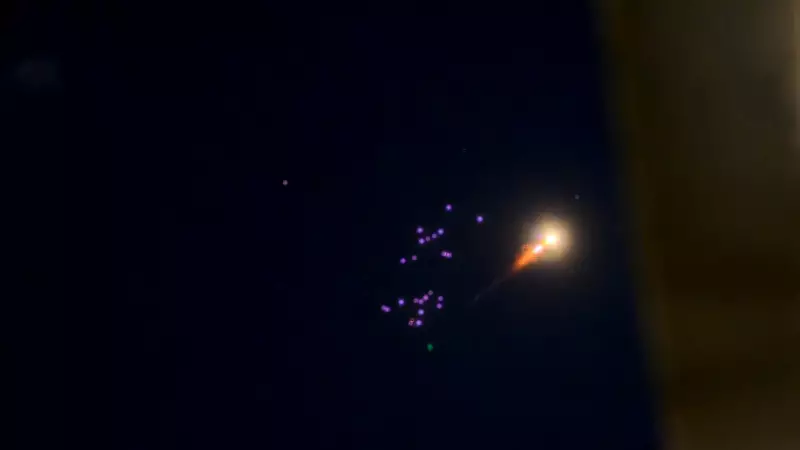
Data from the Tel Aviv-based Institute for National Security Studies indicates that Iran has already deployed 571 missiles and 1,391 drones since hostilities began. While many of these were intercepted by advanced US, Israeli, and Gulf air defence systems, the sheer volume of launches has sparked serious concerns about how long such intense combat can be maintained.
US military officials report a significant slowdown in Iranian offensive operations. General Dan Caine, Chairman of the Joint Chiefs of Staff, stated that Iranian ballistic missile launches have decreased by 86% compared to the first day of fighting, with an additional 23% drop recorded in the past 24 hours. Drone activity has similarly declined sharply, with one-way attack drone launches down 73% since the conflict's inception.

US Production Claims and Iranian Resilience
Washington maintains it possesses overwhelming capacity, with President Donald Trump asserting American stockpiles of key weapons are "virtually unlimited." The Pentagon has placed defence companies under emergency orders to accelerate production. However, officials acknowledge that modern air defence interceptors are expensive, complex, and produced in limited quantities.
Iran continues to assert its ability to sustain fighting despite heavy strikes on its air defences and military infrastructure. With US and Israeli aircraft operating with increasing freedom over Iranian territory, analysts emphasize the crucial question: Can Tehran maintain missile launches faster than its launchers and production facilities are being destroyed?
The Costly Defence Challenge
While Iran's offensive capabilities appear to be diminishing, American officials warn that defensive operations remain extraordinarily costly. Each interception requires advanced air defence missiles such as Patriot or THAAD interceptors, which are both expensive and limited in production capacity.
US forces have intercepted hundreds of Iranian ballistic missiles, protecting bases, regional allies, and critical shipping routes. However, experts caution that interceptors could be depleted faster than they can be replaced. Senator Mark Kelly highlighted this concern on Capitol Hill, noting Iran's continued ability to produce substantial numbers of drones and missiles, describing the situation as "a math problem" regarding air defence munition replenishment.
Iran's Shahed-type drones present particular challenges with their low, slow flight patterns that complicate detection and can overwhelm defences when launched in swarms. US officials have privately acknowledged that intercepting every drone is impossible.
Global Demand and Production Limitations
The conflict occurs amid rising global demand for missile defence systems. Patriot interceptors, each costing over $4 million, are already heavily deployed in Ukraine and across the Middle East. Analysts estimate the United States produces approximately 700 Patriot missiles annually, severely limiting how quickly stocks can be replenished.
US Central Command reports that American and Israeli forces have struck nearly 2,000 Iranian targets using more than 2,000 munitions, destroying missile launchers, storage facilities, and significant portions of Iran's air defence network. With much of Iran's air defence suppressed and its air force largely neutralized, coalition aircraft are now focused on locating and eliminating remaining missile launchers and production sites.

The Endurance Equation
Despite concerns about air defence supplies, analysts believe the United States retains decisive overall military advantage. Following initial long-range strikes, US forces have shifted to cheaper "stand-in" weapons like JDAM bombs rather than expensive cruise missiles, potentially allowing sustained air operations for extended periods.
Some experts suggest the US could maintain its strike campaign almost indefinitely as viable Iranian targets gradually decrease. However, the defensive aspect—intercepting missiles and drones—presents the greater challenge. Estimates indicate the United States may have around 1,600 Patriot interceptors in reserve, and heavy conflict usage could rapidly deplete these numbers.
Ultimately, both sides are consuming weapons faster than manufacturing capabilities can replace them. For Iran, the challenge is sustaining missile launches while launchers and factories are systematically targeted. For the United States and its allies, the critical question remains whether expensive air defence interceptors can match the pace of Iranian missile and drone deployments in this protracted conflict of endurance.