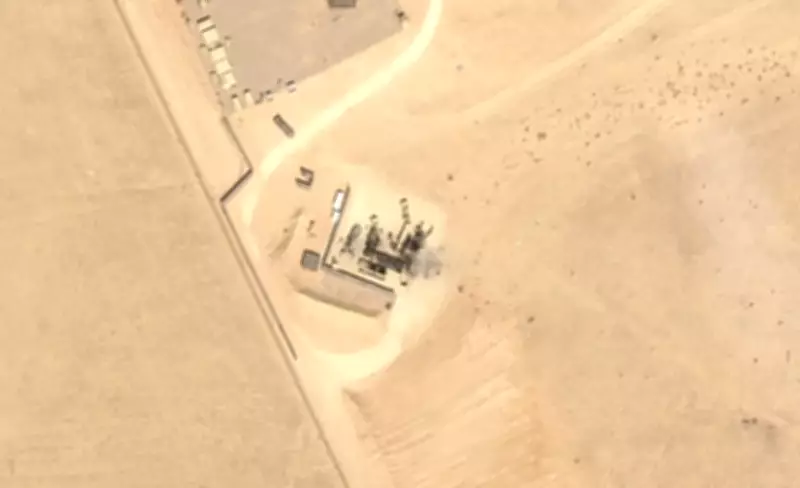
Satellite Imagery Suggests Iranian Strikes May Have Damaged US THAAD Radar Sites
Satellite images and analysis obtained by CNN indicate that strikes carried out by Iran during the ongoing Middle East conflict with the United States and Israel appear to have degraded parts of the US-built Terminal High Altitude Area Defense (THAAD) network. Radar systems in several Gulf states were likely hit, according to a report.
Damage to THAAD Radar at Muwaffaq Salti Air Base in Jordan
Imagery showed that a radar system supporting a THAAD battery at the Muwaffaq Salti Air Base in Jordan was struck and likely destroyed. The base, located more than 500 miles from Iran, hosts US military aircraft and operations. The radar was part of the AN/TPY-2 radar system built by Raytheon, considered the central sensor of the THAAD system and costing close to half a billion dollars, per a 2025 US Missile Defense Agency budget.
Images revealed debris and burn marks around the radar location, along with two large craters nearby, suggesting multiple strikes may have been used to destroy the system. The radar unit is spread across five large trailers, all of which appeared severely damaged or destroyed, the report added.

Strikes Observed in Saudi Arabia and the UAE
Another possible strike was observed near Saudi Arabia's Prince Sultan Air Base, where smoke was seen rising from a radar site used to shelter a THAAD unit. It was not immediately clear whether the radar was present at the time of the strike or if it belonged to the American military or Saudi forces.
Additional satellite photos indicated damage to several buildings at military installations near Ruwais and Sader in the UAE. These sites are known to host THAAD batteries and radar systems.
Impact on Missile Defense Network
These systems help America and Israel sustain operations to detect and track incoming ballistic missiles and drones. Satellite imagery also showed damage to an early warning radar system in Qatar, likely linked to Iran’s attempt to degrade the wider US-Israel missile detection and communication network across the Gulf.
Tehran has targeted American bases in Gulf states as well as civilian infrastructure in these countries and in Israel. On Saturday, Iranian President Masoud Pezeshkian apologized to neighbouring states, saying Iran would not attack them unless it was attacked.
Context of the Conflict
The strikes occurred during the early days of the conflict, which began on February 28. The THAAD network is a critical component of regional defense, and its degradation could have significant implications for security in the Middle East.